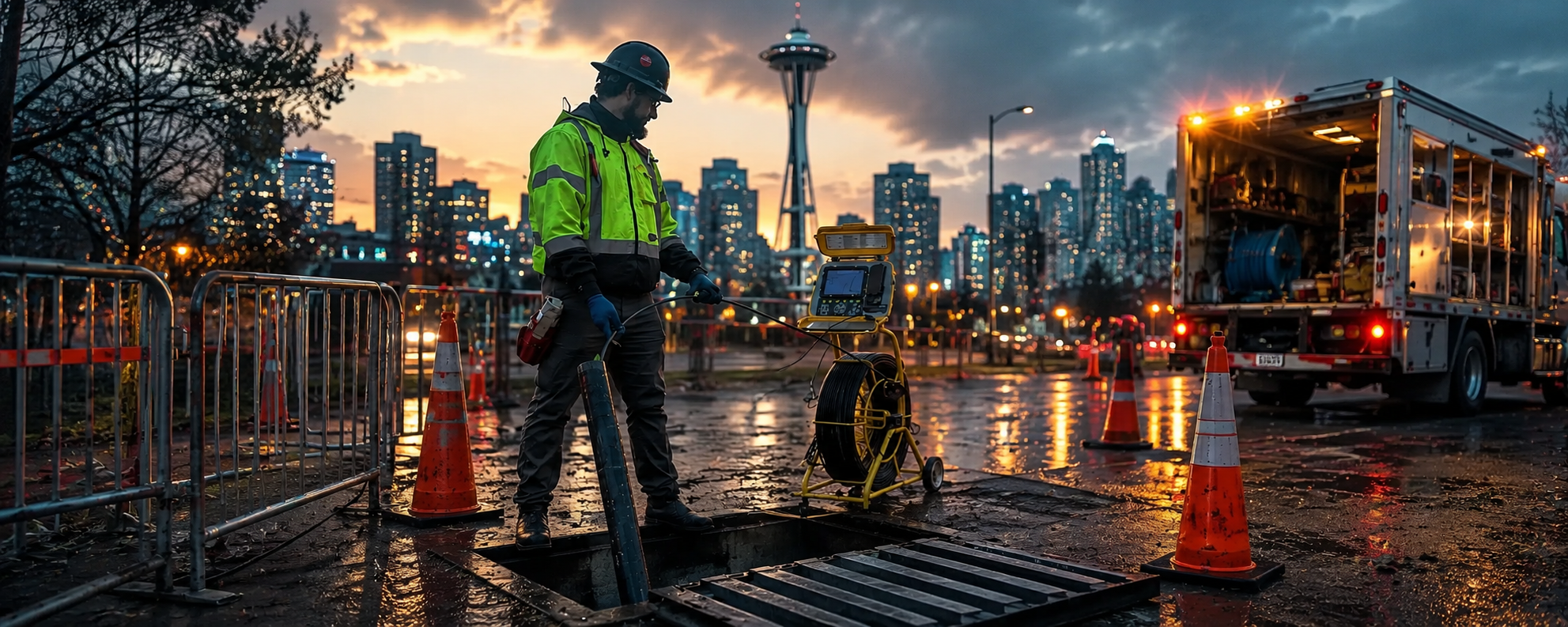
Older sewer infrastructure can create significant challenges during underground investigations, particularly if the documentation is incomplete, access points are limited, or the pipe material is not consistent across various property additions and renovations. In a lot of projects where sewer locates services are used, technicians often run into abandoned lines, connections that were never documented, shifting pipe materials, and even decades of modifications. All of that, together, makes the locating process feel a little more complicated than it really should be.
Unlike newly installed infrastructure that may include tracer wires, updated mapping records, or accessible cleanouts, older sewer systems often require multiple detection methods and careful field verification to identify pipe routes and underground conditions. In many situations, technicians combine electromagnetic locating, video inspection equipment, sondes, and supplemental locating technologies depending on site conditions and client objectives.
Incomplete Records Often Create Locating Challenges
One of the most common issues with aging sewer infrastructure is the lack of reliable documentation. Older properties may have limited as-built drawings, outdated utility records, or undocumented repairs that changed the original pipe routing over time.
During sewer locating projects, technicians often begin with a site walkthrough to review known cleanouts, manholes, catch basins, or exposed plumbing components with the client. Existing records may then be compared against visible site conditions to identify potential inconsistencies before the locating process begins.
In many older neighborhoods throughout Seattle, Tacoma, Everett, and surrounding service areas, sewer systems may include:
- Multiple generations of pipe materials
- Abandoned or inactive sewer laterals
- Improperly documented repairs
- Unmarked junctions and branch connections
- Pipes installed before modern utility documentation standards
Because of these variables, locating older sewer infrastructure frequently requires additional verification methods beyond standard electromagnetic locating procedures.
Pipe Material Can Affect Detection Methods
Older sewer systems commonly contain non-metallic pipe materials such as clay, Orangeburg, PVC, or concrete piping. These materials do not naturally carry an electromagnetic signal, which limits the effectiveness of standard conductive locating methods.
To assist with tracing non-conductive sewer lines, technicians may use insertion-based locating methods during a camera sewer inspection. A traceable sonde can be inserted into the pipe using push camera equipment, allowing the sonde signal to be tracked from the surface as the camera progresses through the sewer line.
Typical insertion workflows may include:
- Identifying accessible cleanouts or entry points
- Selecting the appropriate sonde frequency based on site conditions
- Advancing the camera through the pipe while tracking the sonde signal
- Marking the pipe route at regular intervals
- Recording approximate depth readings when conditions allow
Depth estimates remain approximate and can vary depending on soil conditions, signal distortion, pipe depth, nearby utilities, and environmental interference.
Older Sewer Systems Frequently Contain Obstructions
Aging sewer infrastructure often includes physical conditions that limit inspection and locating capabilities. During a sewer video inspection in Washington, technicians may encounter:
- Heavy root intrusion
- Offset pipe joints
- Debris accumulation
- Crushed pipe sections
- Standing water
- Hard 90-degree bends
- Collapsed segments
- Severe corrosion
These conditions can prevent inspection equipment from advancing through the entire sewer system. In some situations, additional preparation such as pipe cleaning, hydro-jetting, or debris removal may be required before inspection work can continue.
Older sewer systems may also contain multiple transitions between pipe materials, which can affect sonde tracking performance and complicate the interpretation of locating data.
Site Conditions Can Limit Detection Accuracy
Locating older sewer infrastructure is heavily influenced by environmental and site-specific conditions. Surface materials, congestion from nearby utilities, limited access points, and soil composition can all affect the ability to trace underground sewer lines consistently.
Technicians performing sewer locates services may encounter:
- Congested underground utility corridors
- Deep sewer installations
- Limited cleanout access
- Paved surfaces restricting access
- Signal interference from nearby utilities
- Unmarked repairs or abandoned lines
Because of these limitations, multiple service methods are often combined depending on client approval and field conditions.
Common combinations may include:
- Electromagnetic locating
- Video push camera inspections
- Traceable sondes
- Ground Penetrating Radar (GPR)
- Magnetic detection for buried metallic components
- Sewer crawler inspections for larger pipelines
No single locating method can identify every sewer condition or underground feature in all environments. Technicians evaluate site conditions and select the most appropriate combination of technologies for the project scope.
Larger or Deeper Sewer Systems May Require Additional Inspection Methods
Some older commercial or municipal sewer systems exceed the operational capabilities of standard push camera systems. Larger diameter pipelines, longer pipe runs, or deeper infrastructure may require sewer crawler inspections instead of traditional push cameras.
Crawler inspections are commonly used for:
- Larger sewer mains
- Long-distance pipeline inspections
- Pipes with limited push camera accessibility
- Deep infrastructure systems
- Municipal or industrial sewer environments
Depending on pipe size and site conditions, crawler inspections may assist with identifying pipe routing, structural conditions, and access limitations that cannot be evaluated using smaller inspection systems.
Conclusion
Older sewer infrastructure often presents unique locating challenges due to undocumented modifications, non-conductive materials, limited access, environmental conditions, and aging pipe systems. As a result, sewer investigations frequently require a combination of locating technologies, video inspection methods, and field verification procedures to assist with identifying underground sewer routes and subsurface conditions.
Professional workflows, realistic expectations, and clear communication regarding service limitations all play an important role during projects involving aging sewer infrastructure. C-N-I Locates Ltd. provides utility locating, sewer inspection, and subsurface investigation services throughout Washington while supporting contractors, property owners, and industry professionals with information used to assist planning and excavation activities.