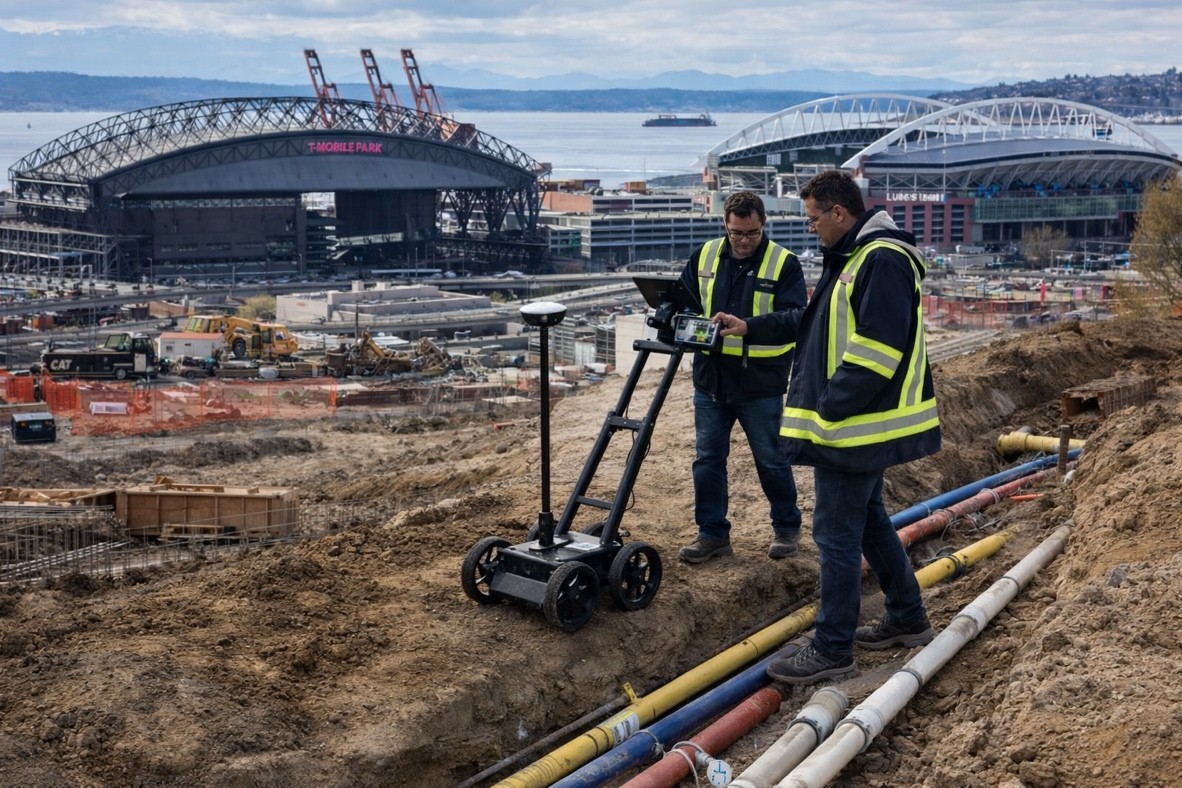
When a digging crew hits an underground utility that “should not have been there,” it is easy to blame poor mapping or human error. But what if the problems run deeper into the world of collective misremembering?The Mandela Effect (where larger groups recall something differently from how it is recorded) seems unrelated to underground work, but it offers an interesting analogy: just because no one seems to remember something being there does not mean it never was!This blog talks about what the Mandela Effect could tell us about invisible utilities, overlooked infrastructure, and why hiring a private locating company may actually be the best defense against costly excavation mistakes.
1. The Memory Gap in Infrastructure Mapping
Just like individuals remember Mandela dying in the 1980s (when he died in 2013), technicians, agents, or city planners assume that certain lines do not exist because they have never seen them documented. Yet memory and reality often have very little to do with each other.
Sometimes maps may not be up-to-date. Previous owners may have added or removed lines, perhaps without permits. Utility companies simply may not keep accurate records, particularly for older properties.
2. Why Standard Locating Isn’t Enough
Municipal locators generally only make markings for the public lines, leaving the private lines invisible and at risk. Hence, private locating services are required. These professionals go beyond what is “on record” to find what others fail to detect using advanced technology, such as forgotten water mains, abandoned power lines, and non-metallic pipes.
Unlike public locates, a private locator conducts a thorough inspection of the property, frequently finding utilities in places people just assumed they weren’t to begin with.
3. Seeing What’s Underground—Literally
When maps fail and memories draw charcoal lines, technology stands firm on accuracy. Private companies utilize advanced equipment such as CCTV sewer inspection systems that furnish in-the-moment visual access into what courses underground in pipes. When excavation teams need to check whether a sewer or drainage line is still in effect, the cameras point out blockages, disjunctions, or total nonexistence of a line without a hole being dug.
A water leak inspection may detect an underground leak during an inspection. It is even more useful for tracking hidden leaks that have been inflicting damage to the property or soil erosion over time.
4. Excavation Requires Certainty, Not Assumptions
Striking unknown lines while excavating leads to consequences such as bodily injury, lawsuits, environmental impact, or cut-off of service. Assuming that “nothing’s there” just because it is not marked on a map is a risky and expensive guess.
Instead, while excavating, crews need to follow the strict guideline of “assume nothing and verify everything in the field.” Working alongside a private locating agency, is a preventive measure that safeguards life, property, and profits.
Conclusion: Don’t Rely on Memory—Rely on Modern Locating
The Mandela Effect reminds us how confidently wrong our memories can be. In locating utilities, this is a risk that no project can afford. Be it an old septic line, an irrigation pipe long forgotten about, or an electrical conduit mislabeled, private utility companies have the technology to identify these unknowns.
C-N-I Locates, a trusted private locating company, sits at the cutting edge of this change.
Whether you are a contractor, a utility provider, or a property owner, we bring unmatched expertise and top-notch methodology to help you avoid costly errors.