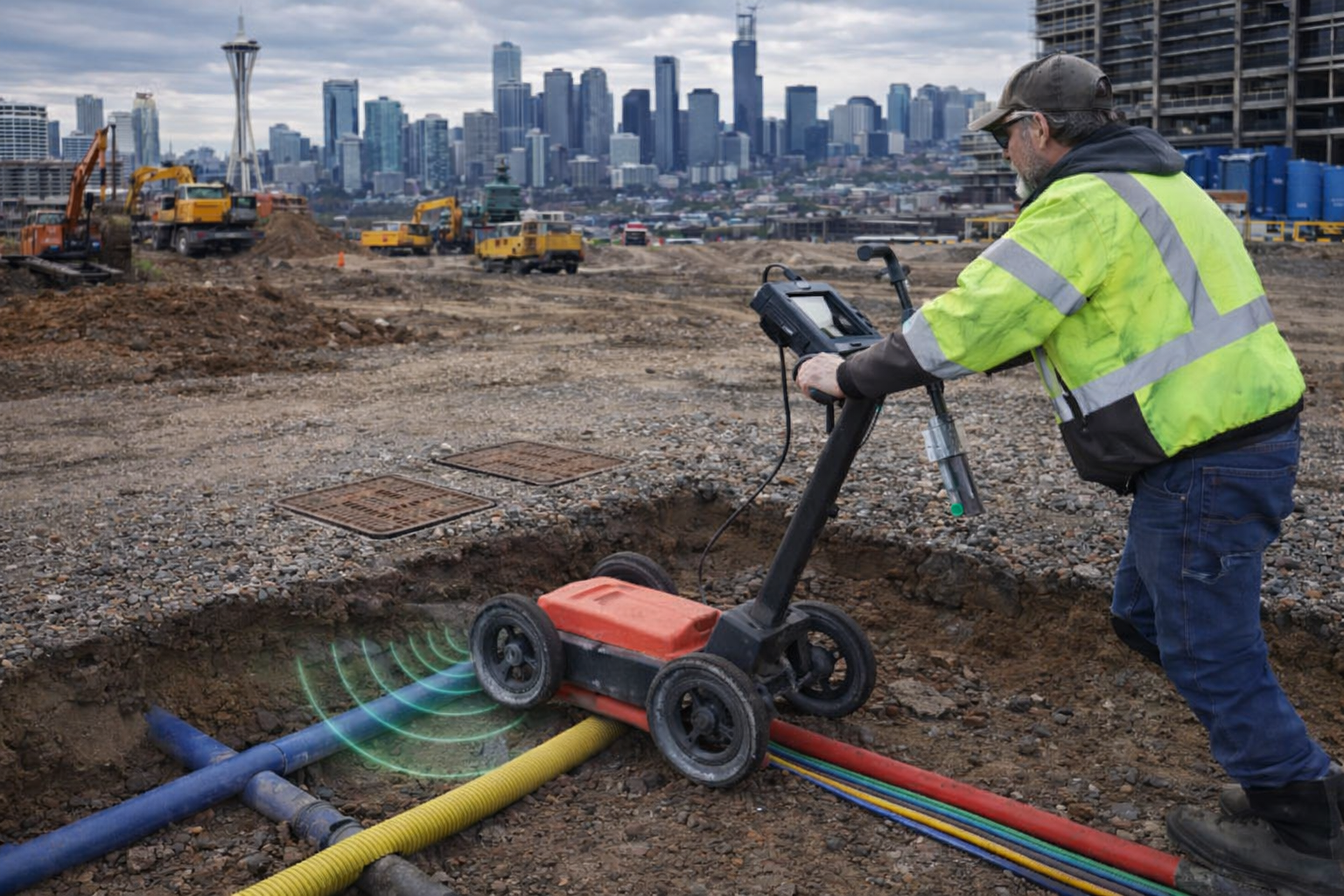
Ground Penetrating Radar, or GPR, is a non-invasive technology that allows you to see underground areas without digging or drilling. It is used in construction, engineering, and utility works because of its ability to detect hidden objects and utilities safely and accurately.
Ground-penetrating radar uses high-frequency radio waves, helping professionals make well-informed decisions before any ground disturbance occurs.
How Ground Penetrating Radar Works
The GPR system emits electromagnetic waves through a specific antenna into the ground. When signals encounter underground materials such as pipes, cables, rebar, or air pockets, they are reflected to the surface. The GPR system captures these reflections and translates them into images or data profiles that are easy to understand. Then, skilled operators decode the information to determine the depth, position, and nature of underground objects.
No harm is done to surfaces during the process, so GPR can be applied to soil, concrete, asphalt, and even within buildings. Such conditions make ground-penetrating radar in Washington services critical for projects where both precision and surface protection are the main factors.
What Can GPR Detect?
GPR technology is extremely flexible and can detect a large variety of underground things, among them:
- Utility lines of electricity, water, and communication connections
- Reinforcement bars, post-tension cables, and air pockets within concrete
- Burying tanks and drainage systems that are not visible
- Accidentally uncovered barriers that would stop excavation or drilling
If professional GPR services in Washington, it will greatly reduce costly mistakes and delays.
Common Applications of GPR
Ground-penetrating radar is a tool used in various industries. Before digging, contractors trust it to prevent hitting underground services. For concrete scanning and structural evaluations, engineers turn to it. Renovating, modernizing, and maintenance planning are among the activities for which facility managers rely.
Accurate subsurface utility mapping in Washington, which ensures compliance with safety standards and safeguards infrastructure, is a significant advantage for municipalities and private property owners alike.
Benefits of Using GPR
- Enhances safety: Knowing the location of underground utilities and structures before the digging operation significantly reduces accidents, injuries, and unexpected hazards.
- Utility damage is avoided: GPR helps prevent strikes on buried pipes, cables, or conduits, which can result in service interruptions and costly repairs.
- Time on projects is saved: When accurate information about what is underground is available at the start, teams can be more productive and avoid delays caused by underground surprises.
- Total cost is reduced: Ongoing projects are kept within budget through no rework, no repairs, and no waiting time.
- Planning is better supported: The availability of clear, precise data lets engineers, contractors, and property owners make informed decisions that can be right before the construction or renovation process.
- Works in difficult conditions: GPR is effective even in areas with heavy utilities, reinforced concrete, or limited access, which is often the same area where traditional locating methods might not work.
Why Professional Expertise Matters
The technology is indeed powerful, but the operator’s experience greatly influences the accuracy of GPR results. Qualified technicians know very well how different materials affect signals and how to draw the right conclusions from the data. With this knowledge, the results are based on the trust of the project teams.
C-N-I Locates Ltd. provides expert ground-penetrating radar solutions that are not only specific in detection but also clear in reporting, safeguarding lives, assets, and the entire project when reliable subsurface information is needed.