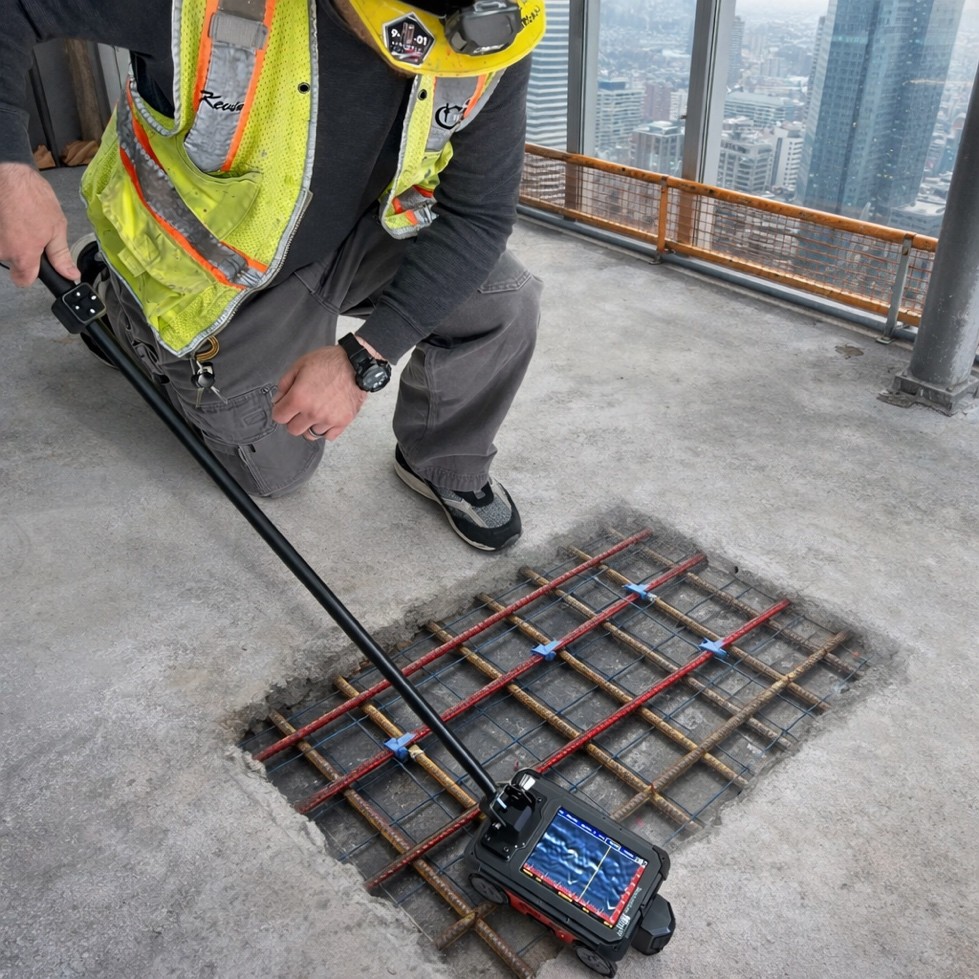
Although concrete may appear solid and fairly predictable from its surface, the underneath can be a complexity and risk. Electrical conduits, rebar, post-tension cables, water lines, and other embedded elements are usually concealed within concrete slabs, walls, and columns. Concrete scanning is the process that is used to find those hidden parts before any cutting, drilling, or coring happens.
The existence of the system allows for efficient, safe, and prudent operation of construction, refurbishment, and maintenance projects.
Understanding Concrete Scanning in Simple Terms
Concrete scanning employs non-invasive technology to “visualize” within concrete structures without doing any harm to them. Technicians do not have to make assumptions or trust old plans, but they can correctly specify what is inside the construction. Concrete scanning in Washington for various projects, primarily in commercial, industrial, and residential areas, helps eliminate doubt and hence minimize mistakes in a better way.
The technology most frequently utilized is ground penetrating radar (GPR). The equipment generates radar waves that penetrate the concrete, and the reflected signals are analyzed to get the position and depth of the internal items.
What Can Concrete Scanning Detect?
The process of concrete scanning can detect various materials and also hazards as follows:
- stainless steel and meshes
- post-tension cables
- electrical wire paths
- pipelines and public utility lines
- hollows or irregularities in the slab thickness
Rebar detection services in Washington are vital for construction projects where the structure is involved. Unintentionally cutting rebar will not only cause structural weakening, but also require costly repairs or may create safety issues.
Why Concrete Scanning Is Necessary Before Cutting or Drilling
Not doing concrete scanning may lead to dire consequences. Live electrical line or post-tension cable strikes can hurt people, shut down projects, or cause irreparable damage to the structure. The costs of repairs, delays, and liability can be much higher than the cost of scanning.
Concrete scanning additionally enables project efficiency gains. It is safe to work where the contractors are sure. This, in turn, leads to less waiting time, less work to be done again, and keeps the project on schedule.
The Role of Ground Penetrating Radar
Ground-penetrating radar services in Washington have become the backbone of modern concrete scanning. GPR is precise and eliminates the possibility of damaging the concrete, thus making it very fast and popular. It is applicable for slabs, walls, beams, and elevated decks, which makes it a versatile technique for numerous kinds of projects.
GPR data allows technicians to mark safe cutting zones directly on the surface, giving crews clear guidance before work begins.
When Should You Schedule Concrete Scanning?
Concrete scanning should be performed before:
- Core drilling or saw cutting
- Installing anchors or bolts
- Structural modifications
- Renovation or demolition work
- New utility installations
Whenever concrete is changed, it makes sense to carry out scanning as a precautionary measure.
Closing Lines
In the case of the projects where accuracy, safety, and professional insights are the main requirements, C-N-I Locates Ltd. offers reliable concrete scanning solutions, which are supported by cutting-edge technology and experienced technicians, thereby allowing the teams to advance with confidence and clarity.