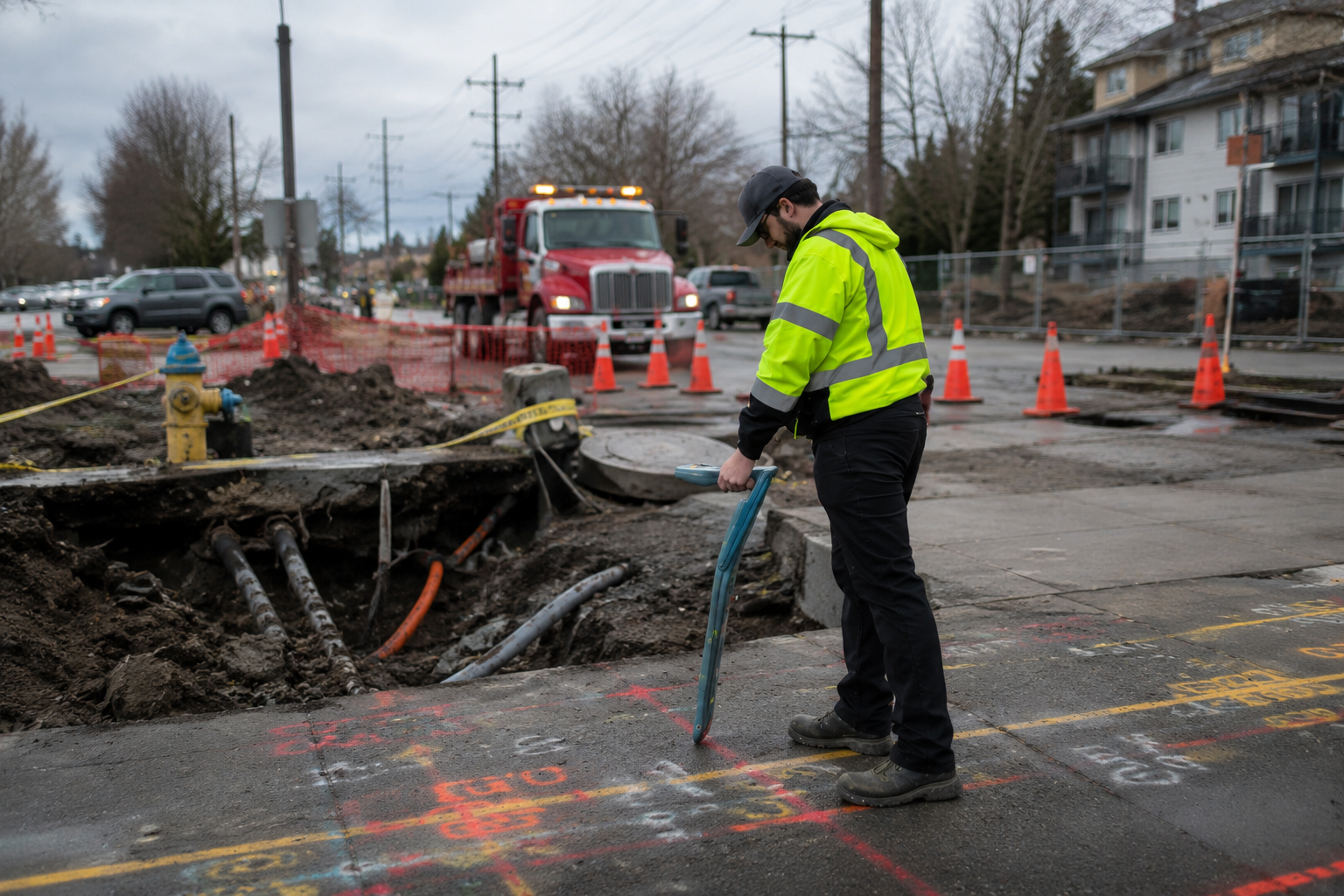
Construction, excavation, renovation, and infrastructure projects often begin with assumptions about what lies beneath the surface. However, underground conditions are not always visible, documented, or accurately represented in existing records. This is why underground utility locating plays an important role before excavation, drilling, trenching, coring, or other ground-disturbing activities take place.
When underground infrastructure is not properly identified, projects can face safety concerns, unexpected delays, damaged utilities, increased costs, and disruptions to nearby operations. Understanding the potential consequences of incomplete utility information helps project teams make informed decisions before work begins.
The Hidden Challenges Beneath the Surface
Many properties contain a combination of utility systems installed over different periods of time. These may include electrical lines, communication cables, water services, sewer lines, irrigation systems, gas lines, and other subsurface infrastructure.
Over time, site conditions can change due to renovations, utility upgrades, landscaping projects, or undocumented modifications. In some cases, available records may not reflect current underground conditions.
Without professional underground utility locating, project teams may have limited visibility into the location of buried infrastructure before excavation begins. This uncertainty can create avoidable risks during construction activities.
Potential Safety Risks
One of the most significant concerns associated with unidentified utilities is worker and site safety.
Damaging buried infrastructure can create hazards such as:
- Shocks or burns from energized electrical conductors.
- Damage to communication networks.
- Disruption of water distribution systems.
- Backed up sewer and drainage infrastructure.
- Exposure to gas-related hazards when applicable.
- Unexpected service interruptions affecting surrounding properties.
A professional utility locating service helps provide information about detectable underground infrastructure before excavation activities occur. This information can support safer planning and more informed decision-making on active job sites.
It is important to note that detection results may be influenced by site conditions, accessibility, utility characteristics, and the limitations of specific locating technologies.
Project Delays and Operational Disruptions
Utility strikes can affect more than the immediate excavation area.
When underground infrastructure is damaged, projects may experience:
- Work stoppages.
- Schedule disruptions.
- Additional site investigations.
- Coordination with utility owners.
- Delayed construction activities.
- Increased project management requirements.
Even a small utility conflict can create ripple effects across multiple phases of a project. Identifying underground infrastructure before excavation often helps project teams reduce uncertainty and improve planning efficiency.
Why Multiple Detection Technologies Matter
No single locating technology is effective in every environment or for every utility type. Experienced utility locating professionals frequently use multiple detection methods to gather information about subsurface conditions.
Electromagnetic locating is commonly used to identify conductive utilities that can carry a detectable signal. However, some underground infrastructure may be nonconductive, difficult to access, or challenging to trace using electromagnetic methods alone.
In these situations, a GPR utility locator may be used as part of a broader subsurface investigation strategy. Ground Penetrating Radar (GPR) creates subsurface images that can help identify underground anomalies and certain buried features that may not be detectable through electromagnetic locating.
Because GPR performance depends on factors such as soil composition, moisture conditions, depth, congestion, and site accessibility, findings must always be interpreted within the context of site-specific conditions.
For many projects, combining technologies can provide a more complete understanding of underground conditions than relying on a single method.
The Importance of Planning Before Excavation
Effective project planning often begins long before excavation equipment arrives on-site.
A professional utility locating service may include activities such as:
- Reviewing available utility information.
- Conducting a site walkthrough.
- Identifying accessible utility connection points.
- Performing electromagnetic locating where appropriate.
- Using supplemental technologies when conditions require additional investigation.
- Marking detected utilities based on field findings.
- Discussing operational limitations and site conditions with the client.
These steps help project teams better understand potential subsurface conflicts before construction activities begin.
Understanding the Limitations of Utility Detection
While utility locating technologies provide valuable information, every locating method has operational limitations.
Factors that may influence results include:
- Utility material and construction.
- Signal accessibility.
- Soil and moisture conditions.
- Surface obstructions.
- Site congestion.
- Depth and orientation of buried infrastructure.
- Availability of supporting records.
Because of these variables, utility locating findings should be evaluated alongside project requirements, site conditions, and applicable excavation practices.
Conclusion
Failing to properly identify underground infrastructure before excavation can lead to safety concerns, project delays, utility damage, and increased costs. Professional underground utility locating helps project teams gather important subsurface information that supports safer and more informed excavation planning. When conditions require additional investigation, technologies such as a GPR utility locator can provide supplemental subsurface imaging to help evaluate underground conditions. By understanding both the capabilities and limitations of modern detection methods, project teams can make better decisions before breaking ground. For professional utility detection and inspection services, contact C-N-I Locates Ltd. to discuss your project requirements and subsurface investigation needs.