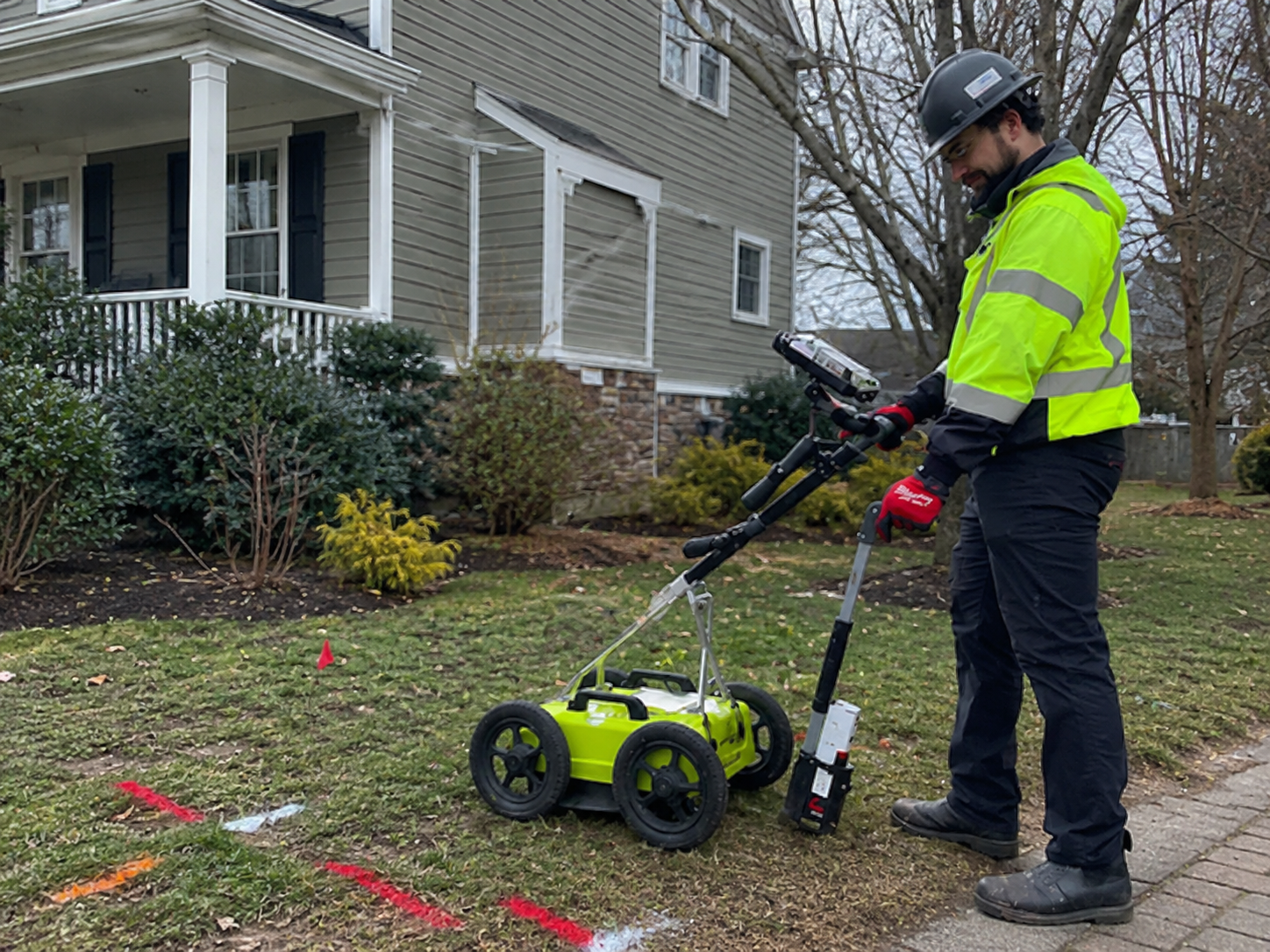
Construction, landscaping, utility upgrades, fence installation, and drainage improvements can all involve work below the surface. For homeowners and property managers, understanding what may be buried underground before a project begins can help support planning, reduce unexpected discoveries, and provide additional information about existing site conditions. A professional utility locating service may provide information about subsurface infrastructure that is not always documented on available plans or records.
Private properties often contain utility infrastructure that extends beyond publicly marked utility networks. As a result, understanding the role of private utility investigations is an important part of project preparation.
Understanding Private Utility Infrastructure
Many property owners are surprised to learn that underground utilities can exist beyond the scope of publicly marked facilities. Water lines, electrical feeds, communication lines, irrigation systems, sewer laterals, and other buried infrastructure may be located on private property.
A private utility locating service focuses on identifying and documenting these types of underground utilities. The objective is not to perform excavation or repairs but to gather information about subsurface conditions using specialized detection technologies.
Depending on site conditions, locating professionals may review available records, conduct a site walkthrough, identify accessible utility connection points, and select appropriate detection methods for the investigation.
Technologies Used During Utility Locating
No single locating method is suitable for every site condition. Utility locating projects often involve multiple technologies to improve the understanding of underground conditions.
Electromagnetic locating is commonly used to identify conductive utility lines such as metallic pipes, tracer wires, and electrical conductors. This method can provide horizontal alignment information when a utility can be energized or connected to a transmitter.
In situations involving unknown utilities or nonconductive infrastructure, ground penetrating radar utility locating may be used as a supplemental detection method. Ground Penetrating Radar (GPR) creates subsurface images by transmitting radar signals into the ground and analyzing returned reflections from buried objects and changes in subsurface conditions.
The effectiveness of GPR can vary based on soil composition, moisture levels, surface conditions, and target characteristics. For this reason, GPR findings are typically interpreted alongside information collected through other detection methods when appropriate.
Why Property Managers Often Request Utility Investigations
Property managers are frequently responsible for maintaining sites that have experienced multiple renovations, tenant improvements, utility upgrades, and landscaping modifications over time.
Historical utility records may not always reflect current field conditions. Utility investigations can provide information that supports:
- Planning for maintenance projects
- Evaluating utility corridors before construction activities
- Investigating undocumented underground infrastructure
- Supporting contractor coordination
- Documenting utility information for future property records
These services are commonly performed at commercial facilities, residential developments, educational campuses, industrial sites, and multi-building properties.
Understanding Service Limitations
Utility locating is a technical process that involves the interpretation of field data, equipment responses, and site conditions. Detection results can be influenced by environmental factors, utility accessibility, subsurface materials, and operational limitations associated with specific technologies.
For example, electromagnetic locating requires suitable conductive paths, while GPR performance may vary in challenging soil conditions. Depth estimates obtained during utility locating activities should be considered approximate because actual utility depths can vary due to installation methods, site changes, and environmental conditions.
Because of these factors, locating professionals often combine technologies to develop a more complete understanding of underground conditions.
Supporting Informed Project Planning
Before a project begins, homeowners and property managers often benefit from gathering as much information as possible about underground infrastructure. A qualified utility locating service in Washington can help identify potential utility pathways and document findings that support project planning activities.
Similarly, a private utility locating service can provide information regarding buried utilities located on private property, while ground penetrating radar utility locating may assist with investigating nonconductive utilities, unidentified underground features, and subsurface anomalies when site conditions are suitable.
Conclusion
Understanding underground conditions is an important part of responsible property management and project preparation. Through the use of electromagnetic utility locating, Ground Penetrating Radar, and other specialized detection methods, property owners can obtain valuable information about buried infrastructure before work begins. C-N-I Locates Ltd. provides utility locating and subsurface investigation services designed to support informed decision-making while recognizing the operational limitations and site-specific conditions associated with underground utility detection.