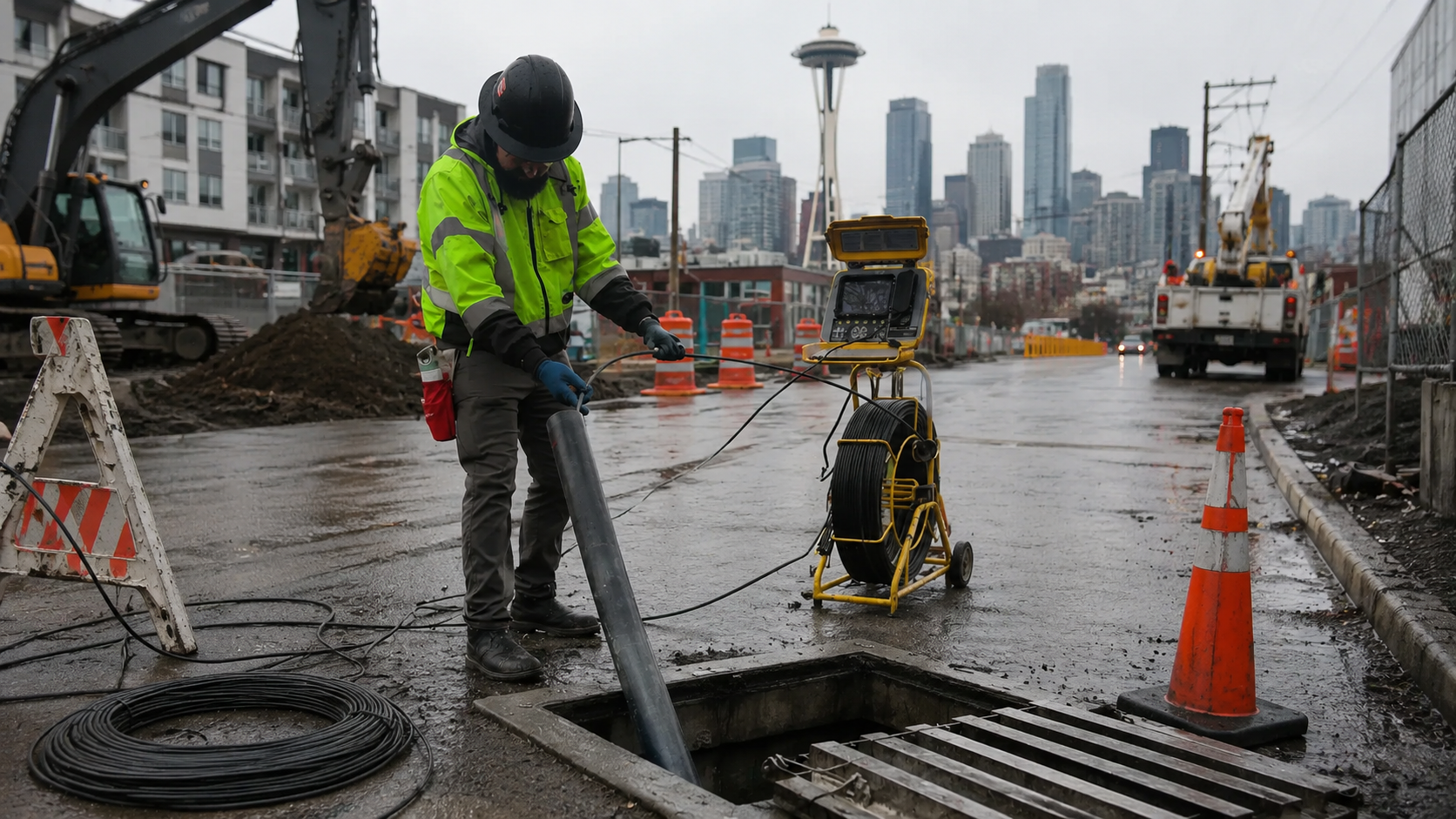
Construction projects often involve working around existing underground infrastructure. Before excavation, directional drilling, utility installation, or site redevelopment begins, understanding the condition and location of underground sewer infrastructure can help project teams make informed decisions. A camera sewer inspection provides visual information about the interior condition of a pipeline, helping identify potential concerns that may affect construction planning.
Pre-construction investigations frequently combine record reviews, utility locating activities, and pipeline inspections to develop a clearer understanding of site conditions before work starts.
Why Sewer Inspections Matter Before Construction
Underground sewer lines may contain defects, blockages, offsets, root intrusion, unknown laterals, or other conditions that are not visible from the surface. If these conditions are not identified during planning, they may create unexpected challenges during construction.
A camera sewer inspection allows technicians to visually evaluate accessible sewer and drain lines using specialized push-camera equipment. The inspection process helps document existing conditions and establish a baseline before construction activities begin.
For property owners, contractors, and project managers, this information can support:
- Pre-construction assessments
- Utility coordination efforts
- Existing condition documentation
- Infrastructure planning discussions
- Risk management strategies
Visual inspection data can also assist when determining whether additional investigation methods may be appropriate.
How Video Inspection Supports Utility Investigations
Video inspection is often used alongside utility locating and mapping activities. While a camera provides information from inside a pipeline, utility locating technologies help identify the approximate path of underground infrastructure from the surface.
Many projects that require sewer locates services benefit from combining inspection data with field observations and available utility records. This approach can provide a more complete understanding of underground conditions before construction begins.
A typical workflow may include:
- Site arrival and project review
- Identification of accessible sewer entry points
- Push-camera deployment into the pipeline
- Observation and documentation of pipe conditions
- Sonde tracking, when applicable
- Review of findings with the client
- Delivery of inspection documentation
Because every site is different, inspection results depend on factors such as pipe accessibility, flow conditions, debris accumulation, and overall pipe condition.
Benefits of Sewer Video Inspection During Project Planning
Construction schedules can be affected by unforeseen underground conditions. Early identification of potential issues may help project teams better prepare for field activities.
A sewer video inspection can support planning efforts by helping clients understand observable pipeline conditions before construction begins. The inspection process may reveal conditions that warrant additional evaluation or coordination before excavation activities occur.
Potential benefits include:
- Improved awareness of existing infrastructure conditions
- Documentation of visible defects or obstructions
- Better coordination between project participants
- Reduced uncertainty during planning phases
- Support for informed decision-making
It is important to recognize that video inspections evaluate only the observable interior of accessible pipelines. Conditions outside the pipe or beyond camera visibility may require supplemental investigation methods.
Understanding Operational Limitations
Like all underground investigation services, video inspections have operational limitations. Camera access depends on available entry points, pipe size, pipe condition, flow levels, and other site-specific factors.
Some sections of a pipeline may be inaccessible due to obstructions, collapsed segments, excessive debris, or other conditions. In certain situations, supplemental locating technologies or additional inspection methods may be recommended to gather further information.
For projects involving sewer locates services, combining multiple technologies often provides a broader understanding of underground infrastructure than relying on a single method alone.
Similarly, a sewer video inspection may be one component of a larger pre-construction investigation strategy that includes utility locating, mapping, or other subsurface assessment services.
Conclusion
Pre-construction planning is most effective when project teams have access to reliable information about existing site conditions. Video camera inspections provide valuable visual documentation of accessible sewer infrastructure and can help support informed planning decisions before construction activities begin. By integrating inspection findings with utility locating and other investigative methods when appropriate, project teams can gain a better understanding of underground conditions. For professional sewer inspection and subsurface investigation support, C-N-I Locates Ltd. provides services designed to assist clients in evaluating underground infrastructure before construction projects move forward.