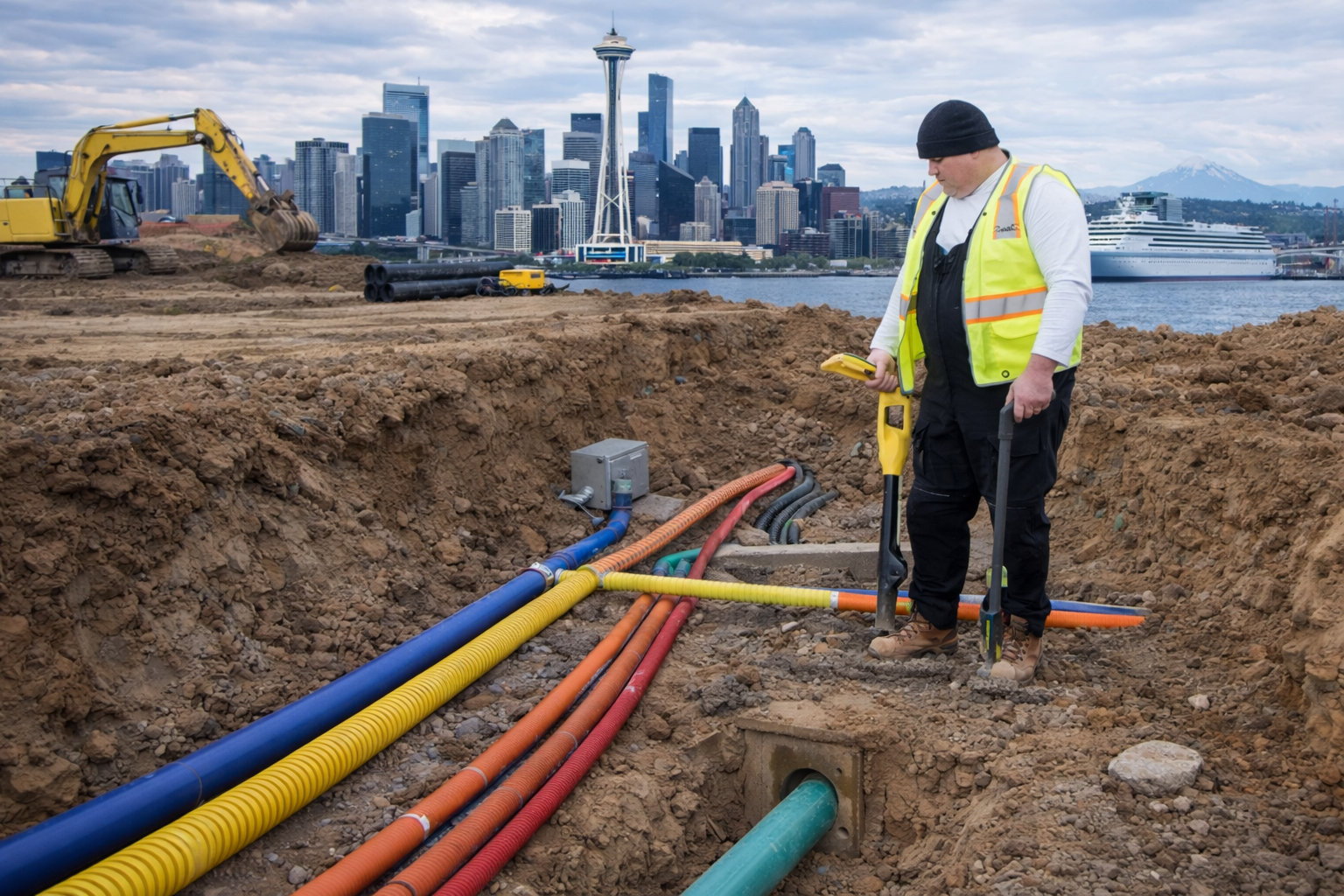
Utility locating plays an essential role in protecting underground infrastructure before excavation, construction, or maintenance activities begin. Professionals working in this field must understand a wide range of detection technologies, safety practices, and regulatory requirements. Utility detection services in Washington support contractors, engineers, and property owners by identifying subsurface utilities and helping reduce the risk of damage during ground-disturbing activities.
Because underground environments vary widely depending on site conditions, utility materials, and historical construction practices, locating work requires more than basic equipment operation. Technicians must develop technical knowledge, field experience, and practical problem-solving skills to interpret signals correctly and work within real-world limitations.
Core Skills Required for Utility Locating
Professional utility locating involves more than identifying a signal in the ground. Technicians must understand how different materials, soil conditions, and infrastructure layouts influence the detection process.
Training programs typically focus on several key technical areas:
- Electromagnetic locating principles for tracing conductive utilities such as electrical cables, gas lines, and metallic water pipes.
- Signal interpretation and troubleshooting help technicians recognize interference or signal distortion in complex environments.
- Subsurface anomaly recognition, which assists technicians when interpreting data collected during Ground Penetrating Radar Services.
- Site safety procedures, including excavation awareness and job-site hazard
- Documentation and field marking standards are used to communicate findings clearly to contractors and project teams.
These skills help technicians evaluate site conditions carefully and select the most appropriate locating methods for each project.
Field Training and Equipment Familiarity
Hands-on field experience is an important part of professional development in the locating industry. Training often includes working with multiple types of detection equipment in different environments such as construction sites, industrial facilities, and municipal infrastructure corridors.
Field training may include instruction on:
- Electromagnetic locating receivers and transmitters
- Ground penetrating radar units and scanning techniques
- Magnetic detection tools used to locate ferrous metals
- Flex rods, sondes, and insertion methods for locating non-metallic utilities
- Acoustic equipment used to locate plastic water services
Technicians learning to operate Ground Penetrating Radar Services in Washington must also understand how soil composition, moisture content, and utility depth can influence radar signal clarity. Interpreting radar data requires practice and experience because subsurface reflections can represent a variety of underground conditions.
Certification and Professional Development
Training programs and certifications help standardize best practices across the utility locating industry. Certifications demonstrate that technicians understand the technical principles behind locating methods and are familiar with safety procedures that support responsible excavation practices.
The distinction in education of different types of utility locating services is often emphasized between public utility locates performed through the 811 system and private locate companies. Understanding the distinction between private and public utilities helps technicians communicate clearly with contractors and property owners about the scope of locating services.
Certification programs typically reinforce knowledge related to:
- Underground utility detection methods
- Field documentation practices
- Safety awareness and excavation risk management
- Interpretation of locating signals and subsurface data
Training may also include continued learning opportunities as new technologies and field practices develop.
Technology Awareness and Service Limitations
Utility locating professionals must also understand the limitations of each detection technology. Factors such as soil composition, depth of utilities, installation methods, and surrounding infrastructure can influence how detection tools perform in the field.
For example, electromagnetic locating works most effectively on conductive utilities, while non- metallic infrastructure may require additional locating methods. Technicians performing utility detection services evaluate these conditions before selecting the most appropriate approach.
Because no single technology can detect every underground condition, professionals that perform private utility locating services in Washington frequently combine multiple methods to improve visibility and confirm field observations. These combinations may include electromagnetic locating, ground penetrating radar scanning, magnetic detection, or other specialized inspection tools, depending on site conditions.
Supporting Safe Excavation Practices
Utility locating plays a critical role in supporting safe excavation and construction activities. Before any digging begins, Washington State law requires individuals and contractors to contact 811 so public utility owners can mark their infrastructure in accordance with RCW 19.122 damage prevention regulations.
While the 811 system helps identify publicly owned infrastructure, additional locating investigations may be necessary in situations where private utilities, unknown lines, or complex subsurface conditions exist. Professionals trained in modern locating techniques help evaluate these environments carefully before excavation work begins.
Conclusion
Training and certification help ensure that utility locating professionals understand the technologies, safety procedures, and regulatory responsibilities associated with subsurface investigations. Because underground environments can vary widely from one project to another, technicians rely on a combination of technical knowledge, field experience, and multiple locating methods to support informed excavation decisions. Through services such as Ground Penetrating Radar Services in Washington, electromagnetic locating, and other detection techniques, trained technicians help improve underground visibility and support safer project planning. These capabilities are part of the professional utility locating and inspection services provided by C-N-I Locates Ltd.