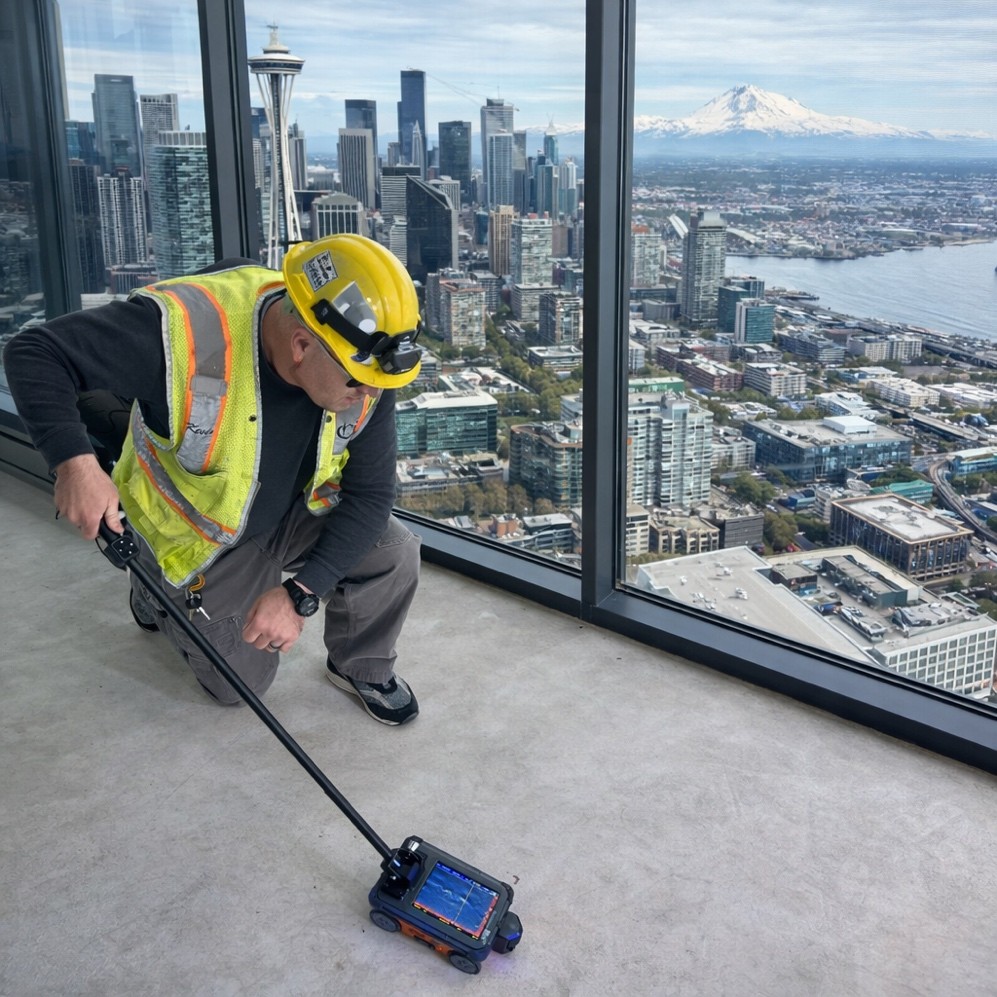
Construction, renovation, and infrastructure upgrades frequently require cutting, drilling, or coring into concrete surfaces. These activities may appear routine, but concrete structures often contain hidden elements that cannot be seen from the surface. Reinforcing steel, post- tension cables, conduits, and plumbing lines may be embedded within slabs, walls, or structural components. Without proper investigation, cutting into these materials can cause structural damage, equipment hazards, and costly project delays. This is why many contractors rely on concrete scanning services in Washington before performing any intrusive work on concrete surfaces.
Concrete scanning helps identify embedded objects and potential obstructions before drilling or coring begins. By understanding what lies beneath the surface, contractors can plan their work more safely and avoid unintended damage to structural/utility components.
Hidden Infrastructure Inside Concrete Structures
Concrete is rarely an empty material. Modern buildings and infrastructure often contain a variety of embedded components that support structural performance or house critical utilities. When cutting or coring is performed without verification, these elements can be unintentionally damaged.
Common embedded components include:
- Reinforcing steel (rebar) is used to strengthen structural
- Post-tension cables that maintain structural tension within
- Electrical conduits carry power to various building
- Plumbing lines or drainage pipes embedded within structural
- Communication or control cables are used for building
Striking any of these elements during drilling or cutting can cause structural weakening, service interruptions, or serious safety risks for workers. Because these elements are concealed, many contractors utilize concrete scanning services to help identify potential hazards before beginning intrusive work.
The Role of Ground Penetrating Radar in Concrete Scanning
One of the most commonly used technologies for scanning concrete structures is Ground Penetrating Radar (GPR). This technology transmits radar signals into the concrete and measures how those signals reflect back when they encounter embedded objects or material changes.
Through this process, ground penetrating radar services in Washington can help identify potential subsurface anomalies that may indicate the presence of rebar, conduits, or other embedded infrastructure. By reviewing these reflections, technicians can mark areas where drilling or cutting should be avoided.
Ground Penetrating Radar is particularly valuable when working with reinforced slabs or structural concrete where multiple components may be present. However, it is important to recognize that radar technology is influenced by several environmental and material factors.
Technology Limitations and Site Conditions
Although radar technology can provide valuable insight into subsurface conditions, no single method can identify every embedded object in every situation. Concrete composition, moisture content, reinforcement density, and slab thickness can all affect signal penetration and clarity.
For this reason, ground penetrating radar services in Washington are often combined with additional investigative methods when conditions require further verification. Technicians evaluate the structure and site conditions to determine which technologies may provide the most reliable information before cutting or coring begins.
This approach helps improve visibility into potential subsurface conditions while acknowledging that each technology has practical limitations depending on the environment in which it is used.
Utility Risks Beneath and Around Concrete Structures
In some cases, utilities may pass through or beneath concrete slabs and structural elements. Electrical conduits, plumbing lines, drainage systems, or communication infrastructure may be routed through building foundations or slab areas. If these systems are damaged during cutting or drilling, the consequences can extend beyond structural concerns.
Contractors and property owners may therefore consult a private utility locating service to help investigate subsurface utilities that may not be identified through public utility marking systems. Private utility locating focuses on utilities located on private property, which may not be included in standard 811 locate requests.
By identifying these utilities in advance, contractors can better plan their work and reduce the risk of damaging important infrastructure during excavation or structural modifications.
Combining Multiple Investigation Methods
Concrete scanning is often part of a broader subsurface investigation process. Depending on site conditions, technicians may use several complementary technologies to improve overall visibility into potential hazards.
These methods may include:
- Electromagnetic locating (EM) to trace conductive
- Magnetic detection for locating ferrous infrastructure, such as valve boxes or
- Traceable rods or sondes for identifying non-conductive
- Camera inspections when pipe interiors must be
Each method provides different types of information. When used together, they can help technicians evaluate site conditions more thoroughly and confirm potential findings before cutting or excavation work begins.
Conclusion
Cutting or coring into concrete without proper investigation can expose construction teams to structural hazards, infrastructure damage, and costly project disruptions. Embedded reinforcement, hidden conduits, and nearby utilities may all be present within or beneath concrete structures. By conducting thorough subsurface evaluations before intrusive work begins, contractors can make more informed decisions about where and how to proceed safely. When these investigations are required across construction, renovation, or infrastructure projects, C-N-I Locates Ltd. provides professional services that help support safer project planning and improved awareness of subsurface conditions.