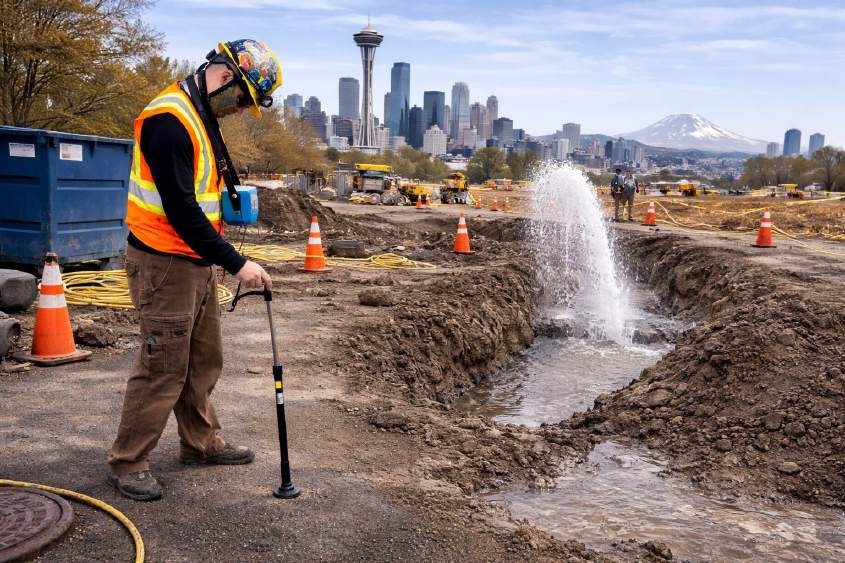
Underground water leaks can develop gradually and often remain unnoticed until visible damage or increased utility costs appear. For property owners and contractors working on excavation or site development, recognizing early warning signs is critical for maintaining safety and preventing further complications. In Washington State, subsurface conditions, varying soil types, and utility layouts can influence how leaks present themselves. Understanding these indicators can help guide decisions around inspection and further investigation. Services such as plumbing water leak detection in Washington may assist in identifying potential problem areas when surface symptoms suggest underlying issues.
Common Surface Indicators of a Leak
In many cases, underground leaks begin with subtle surface-level changes. These signs may not always confirm a leak but can indicate that further evaluation may be necessary.
Typical indicators include:
- Unexplained wet or soggy areas in otherwise dry conditions
- Unusual patches of greener or faster-growing vegetation
- Soil movement, minor sinkage, or soft spots underfoot
- Water pooling without a clear source
These conditions may result from various subsurface factors, including drainage issues or irrigation, so verification through appropriate inspection methods is important. In Washington environments where rainfall is common, distinguishing between natural saturation and potential leaks requires careful observation and professional assessment.
Changes in Water Usage and System Behavior
Another important sign of a possible underground leak is a noticeable change in water usage patterns. Property owners may observe:
- Unexpected increases in water bills
- Continuous water meter activity when no fixtures are in use
- Reduced water pressure in plumbing systems
These changes do not always confirm a leak but may suggest that water is escaping somewhere within the system. In such cases, an underground water leak detection company may be consulted to help evaluate the situation and determine whether further investigation is required.
Why Leaks Can Be Difficult to Identify
Underground leaks are often challenging to locate due to limited visibility and varying site conditions. Factors that can affect detection include:
- Pipe material (metallic vs non-metallic)
- Depth of installation
- Soil composition and moisture levels
- Environmental noise and surface interference
- Accessibility of the utility line
Because of these variables, identifying the exact source of a leak may not always be straightforward. Detection results depend on site conditions, and visibility may vary depending on the technologies used during the investigation process.
Technologies Used to Investigate Underground Leaks
Investigating underground leaks often requires combining multiple technologies to improve visibility and confirm findings. No single method can detect every utility or condition, so technicians select tools based on the environment and the type of infrastructure involved.
Common methods used within leak detection services in Washington may include:
- Acoustic Leak Detection – Uses sensitive equipment to detect the sound of escaping water in pressurized systems.
- Tracer Gas Detection – Introduces a safe gas into the system to help identify leak points where acoustic methods may be limited.
- Electromagnetic Locating (EM) – Helps trace conductive utilities such as metallic water lines.
- Ground Penetrating Radar (GPR) – Identifies subsurface anomalies and non-conductive utilities, depending on soil conditions.
- Non-Metallic Line Detection (Sondes / Tracer Rods) – Assists in tracing plastic or non-conductive pipes.
- Magnetic Detection – Locates ferrous components such as valves, fittings, or buried markers.
These technologies are often used together to improve understanding of subsurface conditions. However, their effectiveness depends on factors such as depth, soil composition, utility material, and site accessibility.
The Role of Utility Awareness Before Investigation
Before any excavation or intrusive work is performed, it is important to understand existing underground utilities. In Washington State, contacting 811 prior to digging is required to help identify publicly registered utilities. However, it is important to recognize that 811 services typically address public infrastructure and may not include private water lines, irrigation systems, or building service connections.
When utility ownership is unclear, verification is recommended to avoid unintended damage. This step supports safer project planning and helps ensure that both public and private utilities are considered before proceeding.
Conclusion
Recognizing the signs of an underground water leak is an important step toward protecting property and maintaining safe working conditions. Indicators such as increased water usage, soil saturation, reduced pressure, and surface changes can all suggest underlying issues, but they do not always provide a complete picture on their own.
Because subsurface environments vary, professional investigations often involve combining multiple locating and detection technologies to improve visibility. Even then, results depend on site conditions, and no method can guarantee complete identification of all utilities or exact leak locations. Before any excavation begins, contacting 811 in compliance with RCW 19.122 remains essential, along with understanding the difference between public and private utilities.
By taking a careful and informed approach, property owners and contractors can make better decisions when addressing potential leaks. C-N-I Locates Ltd. supports these efforts by applying a range of complementary technologies to help improve subsurface awareness while maintaining a strong focus on safety and regulatory compliance.