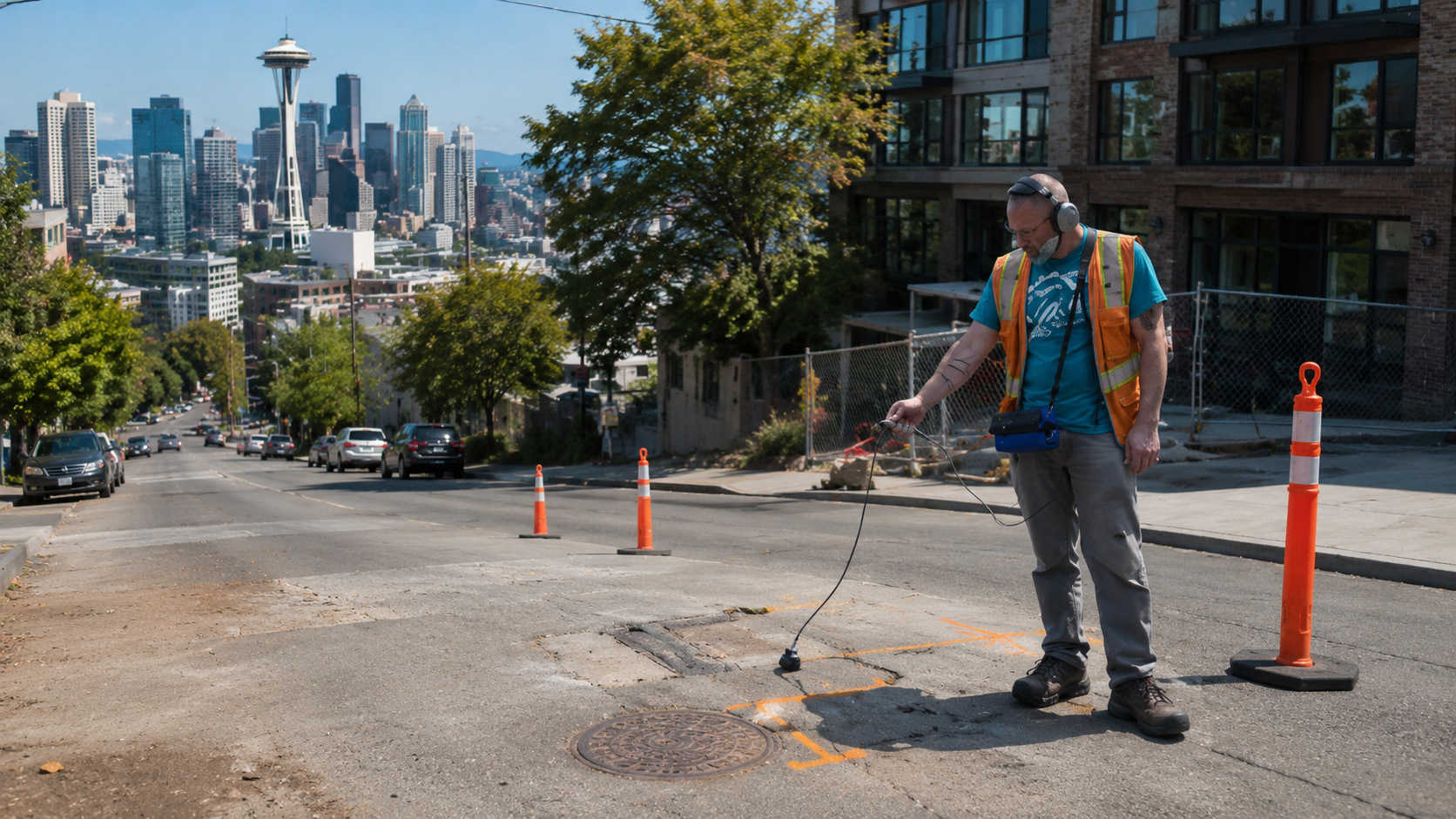
Water leaks beneath the ground can create costly challenges for both homeowners and commercial property managers. However, the approach used to investigate a suspected leak often depends on the type of property, available utility information, site conditions, and access considerations. Professional underground leak detection services help identify areas of concern while minimizing unnecessary disruption to the property.
Whether the problem arises beneath a residential yard or within a large commercial complex, leak investigations generally consist of a combination of utility locating, acoustic testing, and evaluating site-specific factors. Knowing the dissimilarities between residential and commercial water leak detection can help property owners make informed choices when there are indications of water loss.
Residential Leak Detection Considerations
Residential properties often have smaller utility networks, but locating a leak can still be challenging. Underground water lines may pass beneath landscaping, driveways, patios, retaining walls, or other features that limit direct access.
A residential water leak inspection commonly begins with a site review and a discussion of observed symptoms. Property owners may notice unusually high water bills, persistent wet areas, reduced water pressure, or unexplained ground saturation.
During the investigation process, technicians may:
- Review available utility information and site conditions.
- Identify potential water service routes.
- Use acoustic leak detection equipment to listen for leak-related sounds.
- Perform utility locating procedures to better understand underground infrastructure.
- Evaluate environmental factors that may influence results.
In some situations, additional technologies may be used to support findings when site conditions make leak identification more complex.
Commercial Leak Detection Considerations
Commercial properties often present a different set of challenges due to larger utility networks, multiple buildings, extensive paved areas, and higher system complexity. A leak investigation may involve longer pipe runs, multiple service connections, and infrastructure installed over many years.
An underground water leak detection company working on a commercial site frequently begins by reviewing available records, utility layouts, and access points before field testing begins.
Commercial leak detection projects may require:
- Coordination with facility managers or site personnel.
- Identification of multiple water distribution lines.
- Evaluation of utility congestion within the work area.
- Acoustic testing across larger service areas.
- Supplemental utility locating to help distinguish between nearby underground infrastructure.
Because commercial systems often contain more interconnected components, technicians may use multiple detection methods to gather information before recommending next steps.
Why Detection Methods May Differ
Although residential and commercial projects share the same goal of identifying potential leak locations, site conditions can significantly influence the investigation process.
Factors that may affect leak detection include:
- Pipe material and size.
- Ground conditions and soil composition.
- Surface coverings such as asphalt, concrete, or landscaping.
- Background environmental noise.
- Accessibility of valves, meters, and connection points.
No single technology works equally well in every situation. Acoustic leak detection may provide valuable information in one environment, while tracer gas leak detection or supplemental investigative methods may provide additional support in another.
Like all subsurface investigations, leak detection activities involve operational limitations. Environmental conditions, site access restrictions, utility congestion, and infrastructure characteristics can influence results. Findings are based on available site conditions at the time of service.
Conclusion
Residential and commercial properties require different approaches to leak investigations because of variations in utility complexity, access conditions, and infrastructure layouts. Professional underground leak detection services help property owners gather information about suspected leaks, while a thorough water leak inspection supports informed decision-making. When larger or more complex utility networks are involved, an experienced underground water leak detection company can apply multiple detection methods to evaluate underground conditions. For leak detection services supported by utility locating expertise and site-specific investigation practices, property owners throughout Washington can rely on C-N-I Locates Ltd.