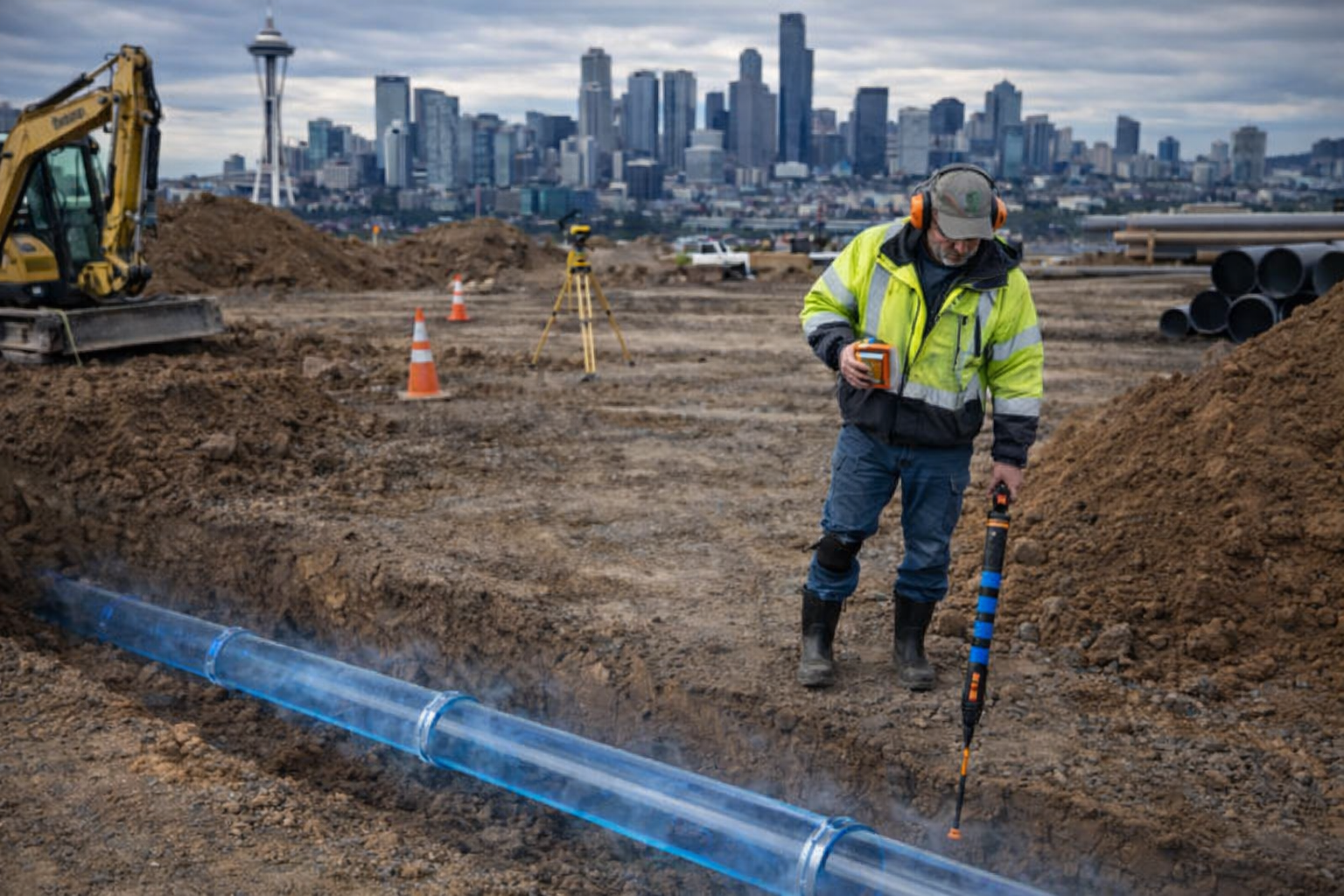
Without prior knowledge of where water lines might be, the possibility of accidental hits increases. This, in turn, increases delays, costs, public inconvenience, accidents, and damage.
A water line locating company in Washington can greatly overcome these challenges, as it informs the digger about what to expect underneath the surface before the onset of any excavation or other field activity.
How It Works
Water line locating is completed using non-invasive equipment designed to respond to the material of the pipe, the site conditions, and the surrounding environment. When metallic water lines are accessible, technicians may apply an electromagnetic signal through a pipe to help trace the path. For non-metallic water lines, alternative detection methods, such as acoustic pipe detection, ground penetrating radar (GPR), or insertions, can be employed when applicable. Suitable options for insertions include using a brand-new steel fish tape and/or a small water sonde.
The results depend on several factors, including pipe condition, surrounding utilities, soil type, depth, and the material’s ability to conduct a signal. The goal is to collect as much reliable information as conditions allow, so clients understand what may be present in the area.
When This Service Is Useful
Water line locating is often requested for:
- Small construction or landscaping projects
- Fence installation, grading, or drainage planning
- Renovation work near older structures
- Adding or adjusting irrigation systems
- Planning trench routes on private property
- Verifying outdated utility maps or site records
In many Washington communities, older water lines may not be well documented. Using private locating services in Washington can help fill these gaps and support safer project planning.
Factors That Can Limit Detection
Several conditions may affect how clearly underground features can be detected:
- Soil moisture: Wet or saturated soil may reduce signal strength for certain methods.
- Rebar or dense metal: Heavy reinforcement or nearby metal objects can interfere with readings.
- Material type: Non-conductive pipes or lines without accessible endpoints may limit the methods that can be used.
- Depth variations: Greater depths may influence how well GPR or electromagnetic equipment responds.
- Surface conditions: Uneven ground, asphalt, or compacted surfaces can affect equipment performance.
- Access restrictions: Limited access to pipe endpoints or tight work areas may reduce available locating options.
These limitations are a normal part of subsurface work. They do not make locating unnecessary, but they do mean results should be viewed as guidance rather than absolute certainty.
What Clients Gain from a Completed Locate
A completed locating service report may include on-site marks, maps, or a field sketch that summarizes the result of the locate. These data points aim to reduce the risk of hitting water lines, improve scheduling, and facilitate safe excavation decisions.
For many project planners, locating water lines in Washington involves walking a fine line between smooth logistics and unexpected delays in the workflow.
Supporting Safer Work Across Washington
Any project that involves digging or modifying surfaces benefits from understanding what may be below ground. C-N-I Locates Ltd provides private utility locating services in Washington to help clients gather non-invasive, site-specific information. Our function is to locate potential subterranean objects, enabling your team to plan their work with greater assurance and a significant reduction in downtime.