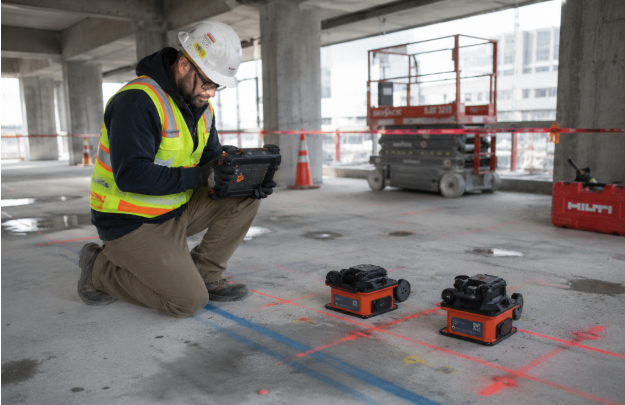
Structural problems always start from partial knowledge. The team working on a certain task needs to know the exact nature of what exists inside concrete slabs, walls, and other structural components. Effective GPR concrete scanning can provide valuable information to help make better choices before beginning any work.
Ground-penetrating radar is a tool that helps detect features within concrete and beneath surfaces. It provides professionals with data on possible features rather than relying solely on visible conditions and existing documentation.
Hidden Features Inside Structures Can Create Challenges
A wide range of items embedded in concrete is common. These can include reinforcement, conduits, electrical paths, post-tension cables, and a host of other embedded items that will not be visible once the concrete is poured. Without adequate information about the condition of the concrete interior, unforeseen challenges may arise during drilling or cutting. Identifying embedded items in advance will provide a clearer understanding of the area being assessed.
The information gathered from a GPR Utility Locator includes details on the concrete’s subsurface environment. Experts assess the possibilities for embedded items using this information.
How GPR Supports Structural Investigation?
The method involves sending signals into the ground to measure the changes in dielectrics between the subsurface materials. There can be different responses depending on the type of materials and the structure. GPR may help in assessing:
- Rebar pattern in concrete
- Channels for conduits or embedded utilities
- Post-tensioning cables
- Void spaces or variations in material
- Other underground features within structural elements
This helps the project team get information about the situation before carrying out any activity that might affect the structural elements.
Why Early Detection Matters Before Concrete Work?
Planning is important in concrete cutting, drilling, and core sampling, as unknown factors may limit the area of operation. A lack of information about underground structures may require further inspection or changes to the project.
Information gained from GPR doesn’t replace engineering, structural designs, and professionals’ decisions. It only provides additional information about the actual situation on the ground.
GPR Concrete Scanning Helps Evaluate Embedded Features
Scanning concrete surfaces is one of the most common applications of ground-penetrating radar in structural applications. Scanning techniques are used to examine areas where drilling, coring, or cutting will be performed.
Before starting the scanning process, the following considerations must be made:
- Slab type
- Reinforcement level
- Accessibility
- Structure design
- Environmental factors
These factors can affect how radar signals propagate through the materials and how experts use the collected information.
GPR Helps Support Safer Planning Around Existing Structures
Many renovation projects, facility upgrades, and infrastructure improvements require working with existing structures. It is worth noting that, unlike in new construction projects, existing structures may have undocumented alterations or embedded elements added during different construction phases.
With GPR, one can obtain additional information for assessing existing conditions. By reviewing the existing elements before any invasive works, project teams can gain insight into the area and plan construction activities accordingly.
This information can be used to make decisions and identify areas requiring additional assessment before continuing construction.
Understanding the Role and Limitations of GPR
GPR Concrete scanning results should be analyzed with consideration of the specific site conditions. Factors such as material characteristics, moisture content, reinforcement density, work area access, and structural complexity can affect the quality of the scanning data.
Ground-penetrating radar utility-locating services could help assess features and potential embedded elements, while accounting for its operational limitations.
Services offered by CNI Locates LTD include GPR (Ground Penetrating Radar), Structural Scanning, and Utility Locating to aid contractors, engineers, and property owners in gaining knowledge about the current sub-surface and structural conditions. The team here helps its clients in gaining an idea of the possible structure before starting invasive work.