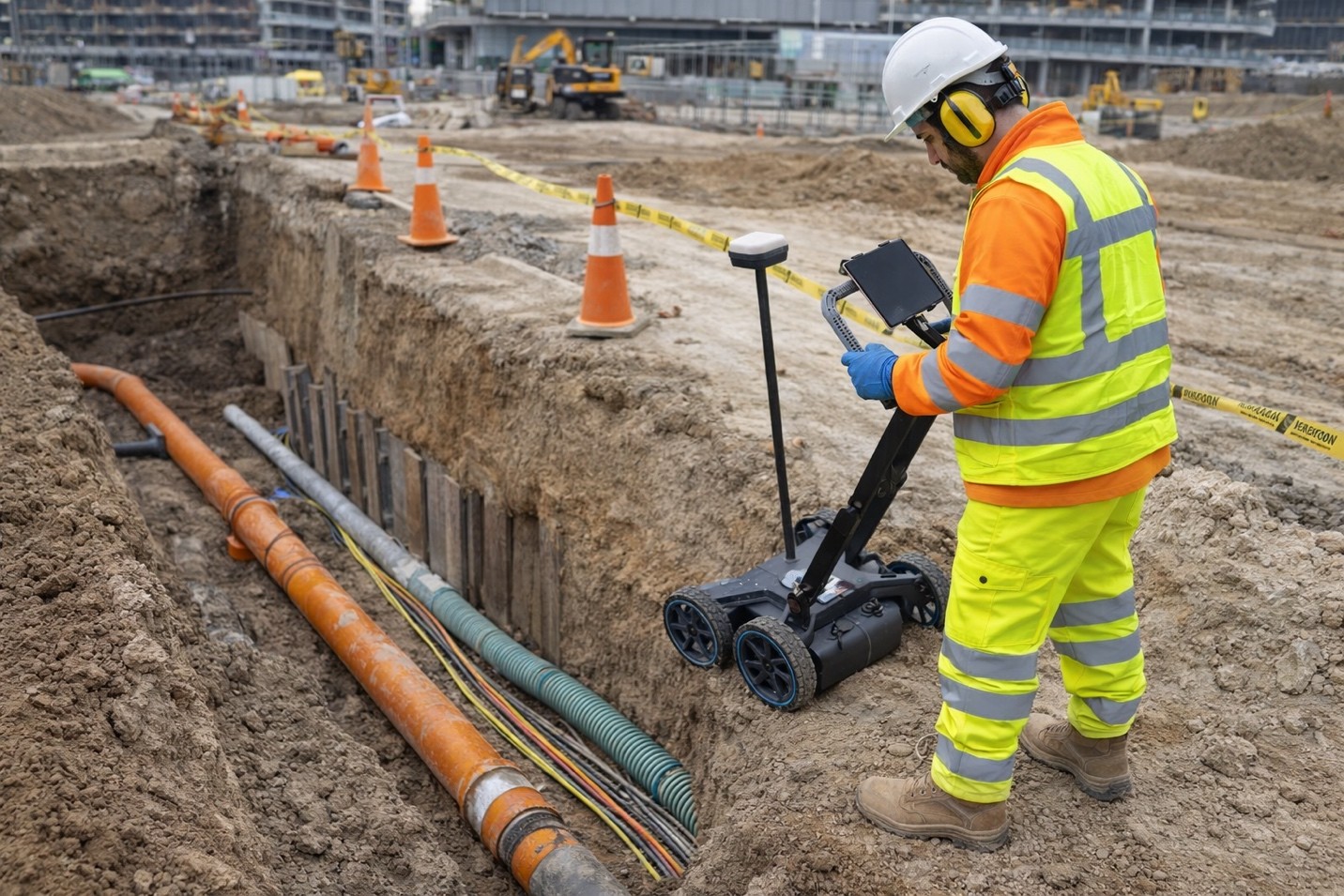
Consider managing underground utilities a daunting task. Water and gas pipelines carry unexpectedly large loads of subsurface utility mapping data, along with the electrical cables and sewer lines. Sometimes crews damage lines because there are no visible marks on the surface to indicate what lays below. These damages lead to costly repairs, sometimes endangering life too. Here, AI and predictive analytics are changing the game.
Such technologies allow companies to look at things proactively, rather than after fixes are made. Instead of sitting idly and waiting for damage, teams now employ data so that they can understand risk beforehand and prevent any possible damage.
What Is Predictive Analysis?
Predictive analysis, therefore, is an intensive use of machine learning techniques, historical records, and current or real-time data for making educated guesses about the future. In premise for underground utility safety, this means finding areas in which incidents are likely to take place, long before an actual need for ground-breaking is considered.
Imagine having a system that, on the basis of previous repair records, soil types, or temperature variations, pinpoints where a water leak is most inclined to occur. Alternatively, it could point to highly probable places of utility strikes where no visible sign of a utility is available. Having such insight places greater control and awareness in the utility team’s hands during design and excavation.
How AI Is Applied to Underground Utility Management
AI-powered systems collect and study data from many sources, like weather patterns, sensor data, past dig records, and maps. This information is then used to:
- Spot weak points in the utility network
- Forecast failures in valves, gauges, or pipelines
- Suggest safe zones for excavation.
- Rank risk levels across an entire worksite
There are a couple of excellent examples of such technology protecting underground infrastructure so projects can be safer and more efficient. One of those methods can be paired quite often with predictive analysis: Ground Penetrating Radar scanning or GPR that confirms in real time what lies below, giving AI model predictions a much stronger confidence.
Improved Planning with Better Mapping
Modern utility work has access to improved underground utility maps. Sensors Mapping Technology-Based AI can further cross-check the layers of data, such as GIS, LiDAR, previous dig records, and corroborate to produce a more complete picture at the site. This results in more thoughtful site planning and fewer surprises.
The presence of sensors can keep the map updated as it has a live feature. As fresh data pours in, the system adapts accordingly, changing with the condition and assisting the team in the field to make better decisions.
Benefits of Leak Detection and Maintenance
The water leak detection field is another important area of application. By investigating pressure drop, flow rate, and soil conditions, predictive models can identify potential problem spots even when the leak has not become visible. This, combined with underground water leak detection services, renders repairs faster and more efficiently.
Conclusion: How C-N-I Locates Supports Smart Utility Protection
The demand for safer and smarter infrastructures gives ample reason to strengthen the role of AI and predictive analytics. Supporting this futuristic approach, C-N-I Locates employs the widest array of technologies, including ground penetrating radar, utility mapping, and leak detection services, throughout Oregon and Washington.