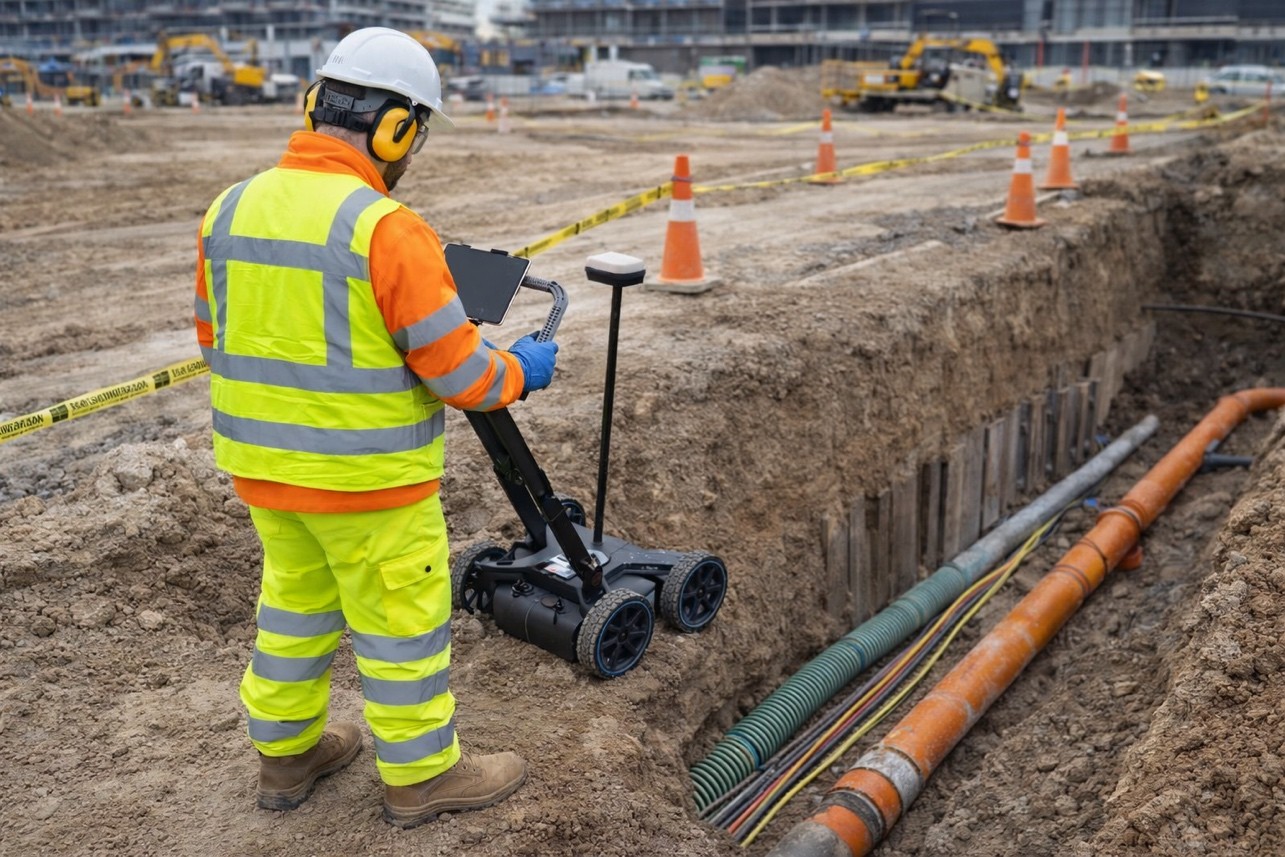
Ground penetrating radar (GPR) is a radar technology that transmits signals through the ground surface to reflect signals from various microstructures and objects buried beneath the soil, concrete, asphalt layers, or stone surfaces. It is used to map objects such as:
- Pipes and cables
- Voids or gaps in the ground
- Rebar in concrete
- Underground storage tanks or buried structures
As GPR can detect metals as well as non-metals, it proves to be more versatile as compared to metal detectors or such instruments.
How Does GPR Work?
The system includes an antenna that transmits high-frequency radio waves into the ground. Whenever these waves meet any buried object or change in material (pipe, cable, concrete layer, etc.), they get reflected toward the surface.
The equipment records and displays signals on the screen in the form of patterns or images. Trained technicians interpret the recorded data to locate objects, estimate depth, or map subsurface features.
Where Is GPR Commonly Used?
GPR is used across many industries and situations. A few examples include:
- Scanning concrete for rebar or voids
- Locating sewer lines or electrical conduits
- Supporting subsurface utility mapping
- Investigating unknown features before digging
Contractors, engineers, and environmental specialists use GPR to plan safer, more informed work.
Limitations to Keep in Mind
Ground penetrating radar is a strong device, but it does have limitations. Wet soils usually attenuate the radio pulse, resulting in lesser signals; high clay content in the soil similarly attenuates the pulse. Thick concrete slabs and heavy rebar grids inhibit clear-cut images. These are the reasons why GPR techniques are often used together with other tools.
Looking for GPR Services?
If you are based in Oregon or Washington and need support in locating what lies underneath, C-N-I Locates is ready to offer professional assistance. We are a trustworthy ground penetrating radar contractor and offer concrete scanning and imaging, along with utility locating services and other similar services for different clients.
Whether you’re trying to avoid buried cables or planning a core drill in a slab, our team brings the tools and experience needed to support your planning.
FAQs
How deep can ground penetrating radar detect underground features?
The depth range of GPR depends upon the nature of the surface material and soil condition. Under ideal circumstances, it may be able to extend anywhere for a few meters, whereas in the case of wet or clay-heavy soils, it sometimes becomes much shallower. Concrete scanning usually entails a shallower depth than that, with an average of 12-18 inches.
Is GPR safe to use near sensitive equipment or electrical lines?
Yes. GPR involves low-energy radio waves that do not cause harm and are considered to be safe in sensitive environments. In the presence of hospitals, data centers, and schools, the apparatus can be used without any possibility of interference with nearby devices.
Can GPR help locate underground water leaks?
GPR cannot be used to search for water directly, but finding out about voids or soil disturbances created by leaks might be possible in certain cases. From a direct point of view, it tends to be used with other methods, such as underground water leak detection services or acoustic sensors.