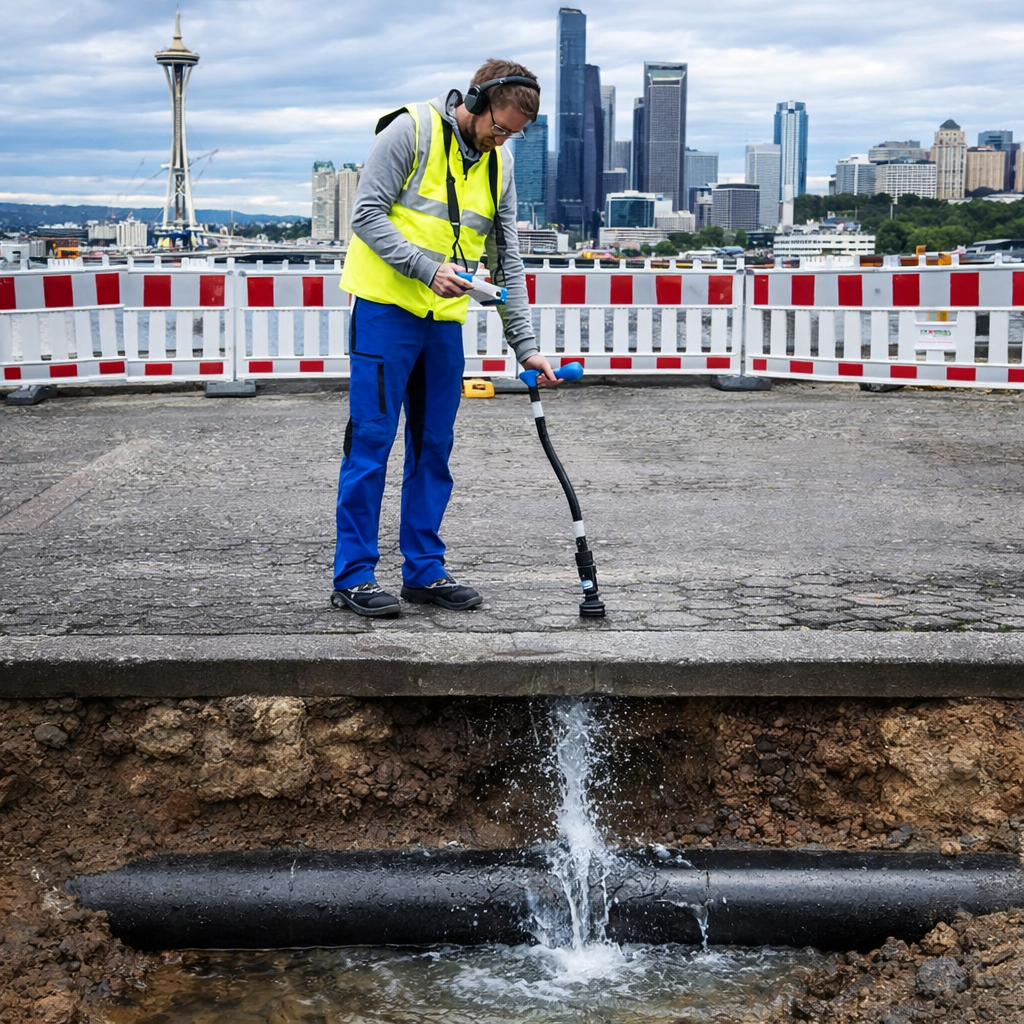
Undetected water leaks can create serious problems for properties, infrastructure, and construction projects. When the affected pipe is non-metallic, such as plastic, PVC, or HDPE, the challenge becomes even greater because these materials cannot be located using traditional conductive locating methods. In these situations, specialized technologies and investigative approaches are required to trace the water line and identify the potential leak area.
Understanding how underground water leak detection services in Washington approach these situations helps property owners and contractors make informed decisions before excavation or repairs begin.
Why Non-Metallic Water Lines Are Difficult to Locate
Many modern water systems use non-metallic materials because they resist corrosion and can be easier to install. However, these same characteristics make them difficult to detect with electromagnetic locating tools, which rely on conductive signals traveling through metallic infrastructure.
Because plastic and similar materials do not conduct electromagnetic signals, technicians must rely on alternative locating methods and investigative techniques. A water line locating service in Washington often evaluates the pipe material, surrounding soil conditions, and site accessibility before determining which detection methods may be appropriate.
Environmental factors can also affect detection work. Soil composition, moisture levels, and the depth of the water line can influence how well certain technologies perform. For this reason, locating and leak investigation work typically involves evaluating site conditions before selecting the most suitable approach.
Investigating Leak Areas in Non-Conductive Pipes
Leak detection in non-metallic water systems often begins with acoustic methods. Pressurized water escaping from a pipe produces vibration and sound that can travel along the pipeline and through surrounding soil. Specialized listening equipment can help technicians detect these sound patterns and narrow down the area where a leak may be occurring.
In some cases, tracer gas may be introduced into the water system to assist with locating the leak. A harmless gas mixture travels through the pipe and escapes at the leak point, where surface detection instruments can identify its presence. These techniques are commonly used as part of underground water leak detection services in Washington when acoustic signals alone are difficult to interpret.
Acoustic pipe tracing may also be used to follow the general route of a pressurized water service. This can help technicians better understand where the pipe is likely positioned before further investigative work is performed.
Locating the Water Line Before Leak Repair
Before excavation or repairs occur, identifying the path of the water line is important to reduce the risk of damage to other underground infrastructure. A water line locating service in Washington may use several techniques to identify the path of the pipeline, depending on site conditions and pipe accessibility.
When possible, traceable rods or sondes can be inserted into the pipeline to create a detectable signal from the surface. Magnetic detection tools may also help locate associated infrastructure such as valves, meter boxes, or metallic fittings that indicate the route of the pipe.
In many cases, multiple service applications are used together to improve overall visibility of the subsurface environment and confirm findings before excavation begins.
Supporting Technologies Used During Leak Investigations
In certain situations, GPR locates in Washington may be used to identify subsurface anomalies or other buried infrastructure near the suspected leak area. Ground penetrating radar works by transmitting radar pulses into the ground and measuring reflections from buried objects or material changes beneath the surface.
Radar technology can sometimes reveal disturbances in the surrounding soil that may be associated with water leaks or buried utilities. However, the effectiveness of radar imaging can vary depending on soil composition, depth, and moisture content.
Because radar reflections may represent multiple subsurface features, interpretation of the data requires careful analysis by trained technicians.
Why Multiple Technologies Are Often Used Together
Subsurface investigation rarely relies on a single locating method. Site conditions, pipe materials, and surrounding infrastructure often require technicians to combine different technologies to build a clearer understanding of what exists below the surface.
For example, GPR locates in Washington may be used alongside acoustic leak detection, traceable flex rods, magnetic detection, or electromagnetic locating, depending on the situation.
Each technology contributes different types of information that help technicians interpret the underground environment and identify potential leak areas.
Combining service methods also helps technicians work around the limitations that each technology may encounter in certain soil types, depths, or infrastructure conditions.
Excavation Safety and Utility Awareness
Before any excavation or repair work begins, property owners and contractors should contact 811 to request public utility locates. The 811 system is intended to identify publicly owned underground utilities prior to excavation activities.
It is important to understand that the 811 locating process typically addresses only public infrastructure. Privately owned utilities may not be included in those markings and may require private locating services prior to excavation.
Washington State excavation safety requirements are governed by RCW 19.122, which outlines responsibilities for excavation planning and underground utility damage prevention.
Conclusion
Locating leaks in non-metallic water lines requires careful investigation, specialized equipment, and an understanding of how different detection technologies perform under varying site conditions. Techniques such as acoustic leak detection, tracer gas methods, and subsurface scanning may be combined to trace pipelines and identify potential leak areas before excavation. By applying multiple locating approaches and evaluating real-world site variables, technicians can support safer and more informed repair planning. C-N-I Locates Ltd. provides professional utility locating and inspection services that help contractors, engineers, and property owners better understand subsurface conditions before construction or repair work begins.