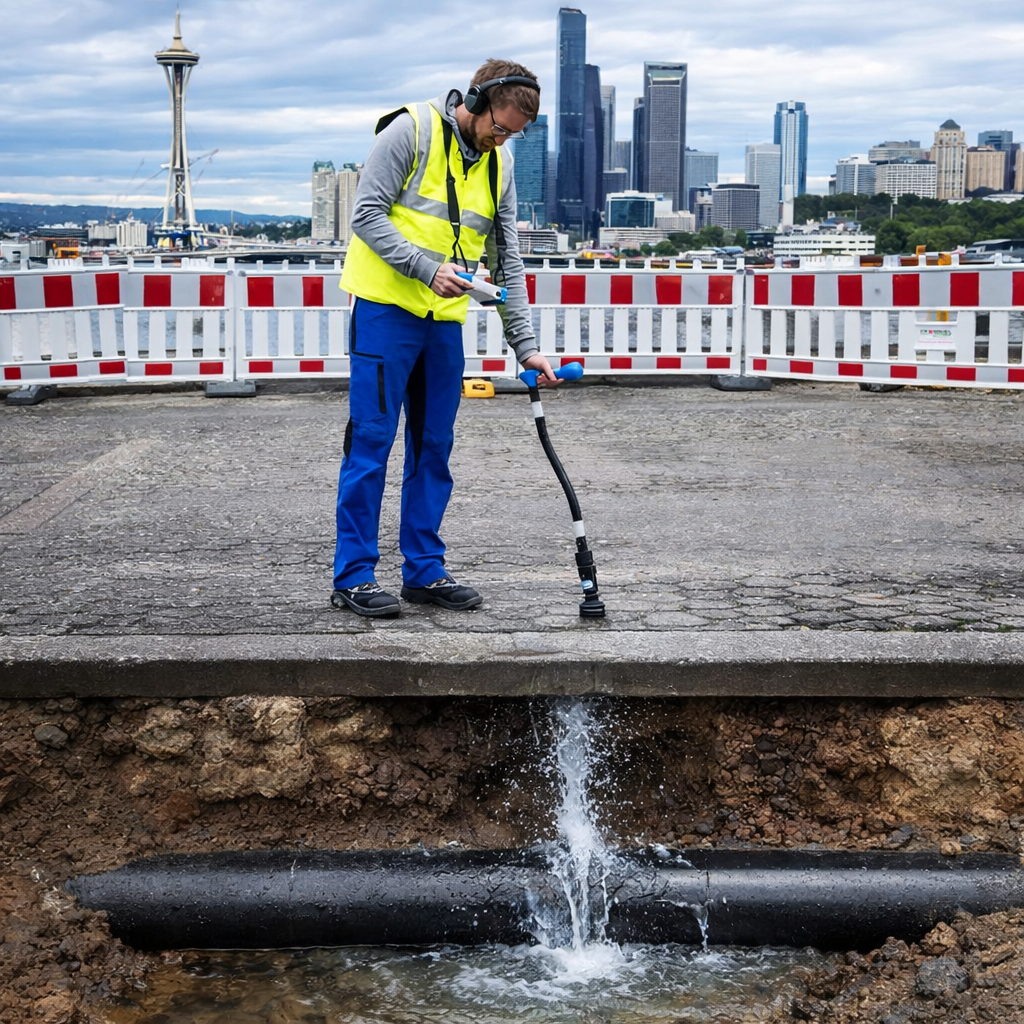
Two terms that are often used in the detection of subsurface objects are concrete scanning and ground-penetrating radar services. They both use ground penetrating radar but are used for different applications and environments.
Knowing the difference helps in choosing the correct service for your project. Whether it is used on the construction site or for the inspection of concrete slabs, both services are important for safety and precision.
What is Ground Penetrating Radar Utility Locating?
GPR services take radar impulses to create images of the subsurface. It is primarily used to locate underground utilities like gas lines, water pipes, and electrical conduits. It works by transmitting radio waves into the ground. The waves are reflected and returned to the surface when they strike a difference in dielectrics between materials. The control unit then creates a visualization of the subsurface.
If you are digging or trenching on a property, this becomes a critical service. Damage to underground utility lines may result in huge safety risks and expenses. Therefore, GPR utility locating is absolutely necessary for construction crews, engineers, and contractors.
What is Concrete Scanning?
Concrete scanning is a specialized service that is used for investigating the surface of concrete such as walls, ceilings, or floors. This technique is implemented when contractors are performing core drilling, saw cutting, anchoring, etc. It is used primarily to detect rebar, post-tension cables, conduits, bottom of slabs, or voids.
Concrete scanning is quite unique and different from the general subsurface locating. It focuses on shallow depths, usually a few inches to a few feet. It is highly profitable as it allows workers to plan modifications safely without destroying structural components.
Key Differences
Application Area
Where ground-penetrating radar is used for a wide variety of subsurface detection tasks outdoors across large areas, concrete scanning is designed for narrow inspections of concrete structures. Usually, concrete scanning jobs are performed indoors at different job sites.
Depth of Detection
Ground-penetrating radar locates utilities buried underground several feet deep. Concrete scanning is used for depths up to 32 inches.
Purpose
GPR locating aims at the detection of utilities, pipelines, and numerous other buried services, while concrete scanning prevents damaging utilities and reinforcing steel and cables during cutting or coring.
Equipment Used
While both devices employ radar as the primary tool of choice, the devices differ in setup. Concrete scanners are tuned to provide detailed images from dense materials while a GPR system used for utility location at deeper depths.
Final Thoughts
Concrete scanning and ground penetrating radar are beneficial services used in different situations. You should know the time when each service should be used to avoid negative effects, protect workers, and ensure project efficiency. This is where a locating company experienced in delivering both solutions is suitable to achieve targets accurately and without putting others at risk.
At C-N-I Locates, we offer comprehensive utility locating, giving high-quality results! Get in touch with us to discuss your next utility scan!