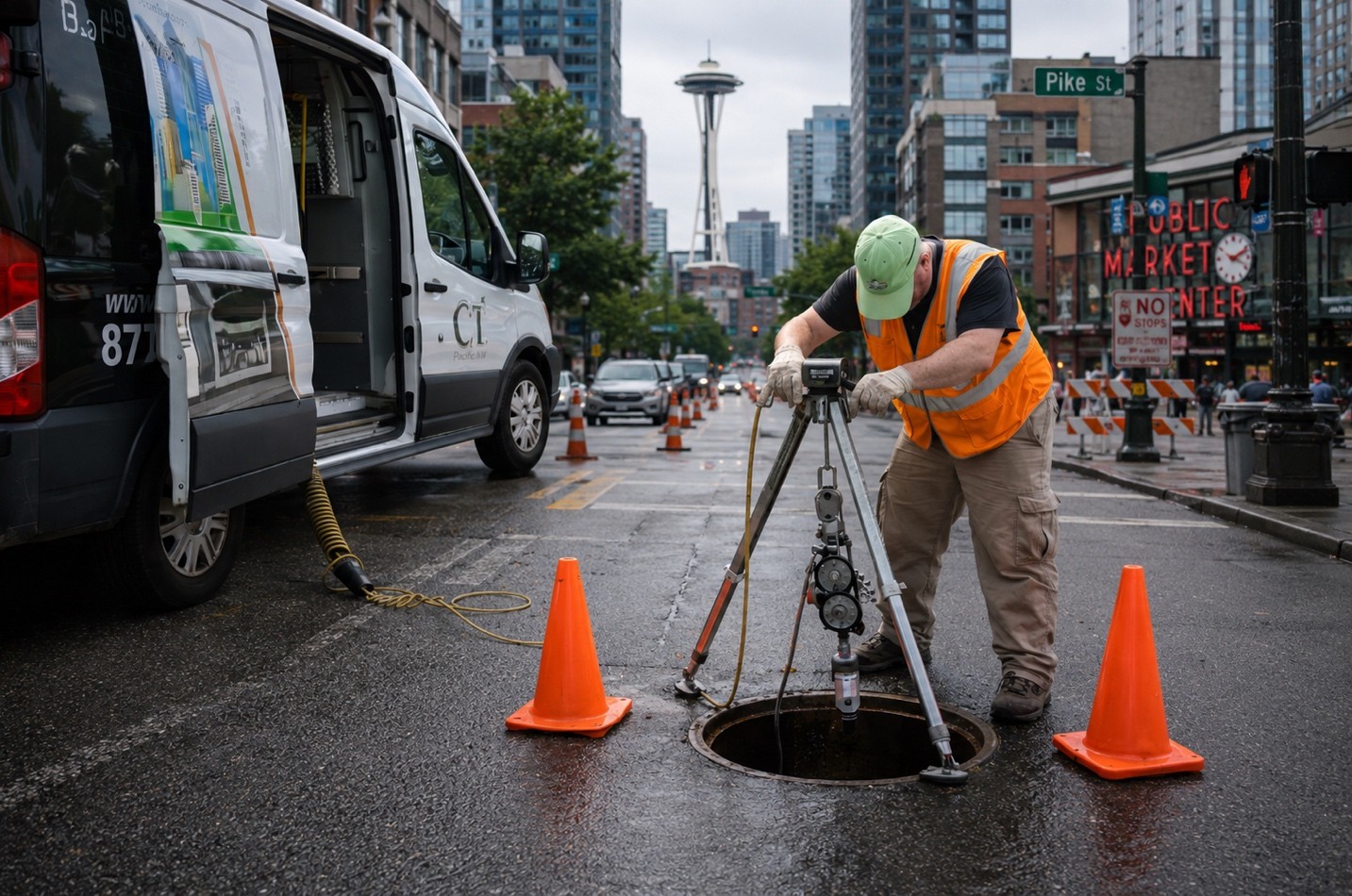
Safe planning, maintenance work, and excavation activities all require knowledge about underground sewer system operations. Many issues develop below the surface without visible warning signs, making early identification challenging. The process of sewer infrastructure assessment benefits from camera inspection technology, as it enables the detection of potential problems. Professionals use sewer locates services in Washington to support subsurface awareness and improve visibility before excavation or repair decisions are made. The ability to discover existing conditions in a particular site requires multiple methods to be used because different site conditions, pipe materials, and accessibility factors will affect the results. The limitations of subsurface investigation techniques need to be understood, as they determine the expected outcomes that must be maintained throughout the investigation process.
What Camera Inspections Reveal in Sewer Systems
The technicians use camera-based inspection methods to examine sewer lines through visual inspection of their internal condition. The technicians use specialized push cameras and crawler systems to inspect pipelines, which enables them to discover both structural problems and blockages.
Common findings include:
- Pipe misalignments
- Structural damage or deformation
- Debris accumulation
- Changes in pipe material or condition
- Blockages
These inspections provide valuable visual data, helping property owners and contractors better understand underground conditions. Sewer pipe inspections help make informed decisions. However, visibility depends on factors such as pipe cleanliness, diameter, and access points.
Common Sewer Line Failures Identified
Several types of failures are frequently identified during sewer inspections. These issues can develop over time due to environmental conditions, installation practices, or aging infrastructure.
Typical failures include:
- Cracked or fractured pipes caused by soil movement or external pressure
- Root intrusion, where tree roots enter joints or damaged sections
- Pipe collapses due to structural weakening
- Offset joints, where pipe sections become misaligned
- Blockages, including grease buildup, debris, or foreign objects
In many cases, identifying these conditions early can help reduce further complications. Technologies used in camera sewer inspections assist in detecting these failures, though interpretation of findings depends on technician experience and site-specific variables.
Why Some Failures Are Difficult to Detect
While camera inspections provide valuable insights, certain limitations can affect detection. Sewer systems may have conditions that restrict visibility or access, making complete assessment more complex.
Challenges may include:
- Heavy debris or sediment obstructs the camera view
- Water-filled pipes reduce visibility
- Limited entry points prevent full system access
- Complex pipe configurations or multiple connections
Because of these factors, technicians often evaluate site conditions before and during inspections. In many projects, additional methods may be recommended alongside sewer locates services to improve overall understanding of subsurface conditions.
Role of Combined Technologies in Sewer Investigations
No single technology can identify every underground condition. For this reason, technicians may combine multiple service methods depending on site conditions and client requirements.
These may include:
- Electromagnetic locating for tracing conductive lines
- Ground Penetrating Radar (GPR) for identifying subsurface anomalies
- Acoustic or insertion-based methods for non-metallic pipes
- Camera inspections for internal pipe evaluation
When used together, these approaches help improve visibility and provide a more complete understanding of underground infrastructure. For example, pairing locating methods with sewer pipe inspections can help confirm pipe routes while identifying internal issues. Still, all methods are subject to environmental and operational limitations, and results may vary.
Understanding Sewer Infrastructure Limitations
It is important to recognize that underground investigations are influenced by real-world conditions. Factors such as soil composition, pipe depth, material type, and site accessibility can all affect the outcome of an inspection.
Technicians typically:
- Evaluate site conditions before starting work
- Adjust methods based on accessibility and utility type
- Communicate any limitations observed during the process
Additionally, property owners should be aware that public utility locates requested through 811 primarily address publicly owned infrastructure. Private sewer lines, including laterals connected to buildings, may not be included and could require additional investigation by companies that utilize camera sewer inspections.
Washington State law under RCW 19.122 requires contacting 811 before excavation to help identify public utilities and support safe digging practices.
Conclusion
Camera inspections provide a valuable way to identify common sewer line failures such as cracks, root intrusion, and blockages. However, these inspections are only one part of a broader subsurface investigation process. Because underground conditions vary, technicians often combine multiple technologies to improve visibility and better understand site-specific challenges. Recognizing service limitations, understanding the difference between public and private utilities, and following proper excavation procedures are all essential steps in reducing risk. For projects requiring detailed subsurface insight, C-N-I Locates Ltd. provides professional utility locating and inspection services designed to support safe and informed decision-making.