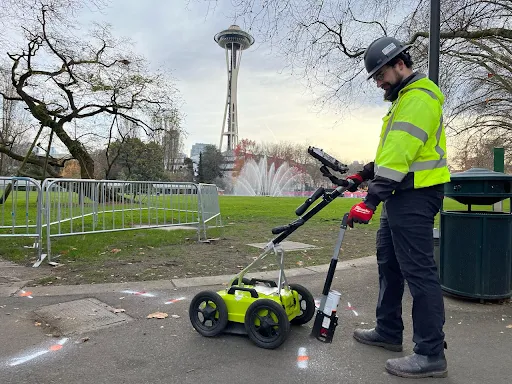
Excavating near underground utilities is proving to be a growing challenge for construction teams. As infrastructure grows bigger and underground spaces become more congested, digging carefully and with pertinent understanding has never been more important. Choosing one technology over the other helps minimize risk, keep projects on schedule, and boost safety on the job.
Why Safe Excavation?
Thousands of underground utility strikes occur every year, resulting in interruptions in services, hazards to people, and delays. According to some industry sources, the number of damages reported in just one recent year hit over 213,000. They occur either due to improper locating of utilities or using inappropriate digging tools and equipment given the site conditions. While excavation projects continue to increase across the US, it has now become indispensable to select technologies smartly to avoid such issues.
Getting to Know Jobsite Challenges
Excavation is challenging around power lines, gas pipes, and communication cables. Their soil types, the weather, and other infrastructural presence impact your digging decisions. Adding to the difficulty is the interference with locating tools that stems from the presence of metals or high-tension power sources nearby, thus increasing the challenge in utility locating. Enter specialized solutions such as ground penetrating radar scanning and other locating technologies.
Make the Right Technology Choice
Choosing the right technology starts with understanding the jobsite. For instance, ground penetrating radar scanning is very useful in urban environments where numerous utilities are buried close to one another. It can detect different types of materials and help construct a better picture of what is underground. Additionally, vacuum excavation equipment excavates air or water to safely expose utilities without causing damage.
Another important consideration, often used in conjunction with underground utility mapping, is the creation of as-built documentation that describes situations of infrastructure on site, according to good planning, thus reducing surprises. This method is more helpful in situations in which utilities have been installed for a long time, and it is possible that the documented records might be outdated or even not there.
Working Toward Safer Digging
Before any work begins, contractors should notify 811 and await marking of utilities. Next, locating systems that track interference and job-site conditions should be employed for an added layer of safety. Teams will need to be trained in the use of these tools, to maintain them, and keep the records of all findings. The data and maps generated can be shared in real time with the entire stakeholder group to keep everyone updated.
Conclusion: Making Every Dig Smarter with the Right Technology
Being armed with the right equipment makes all the difference in today’s busy and complex subterranean environment. From ground penetrating radar scanning to other utility locating services, selecting the right tools for the job site increases safety and efficiency.
C-N-I Locates contributes to safe digging through dependable locating services tailored to the demands of a particular project. Our experienced locating team uses industry-standard tools and procedures to minimize risk and give proper consideration to project timelines.