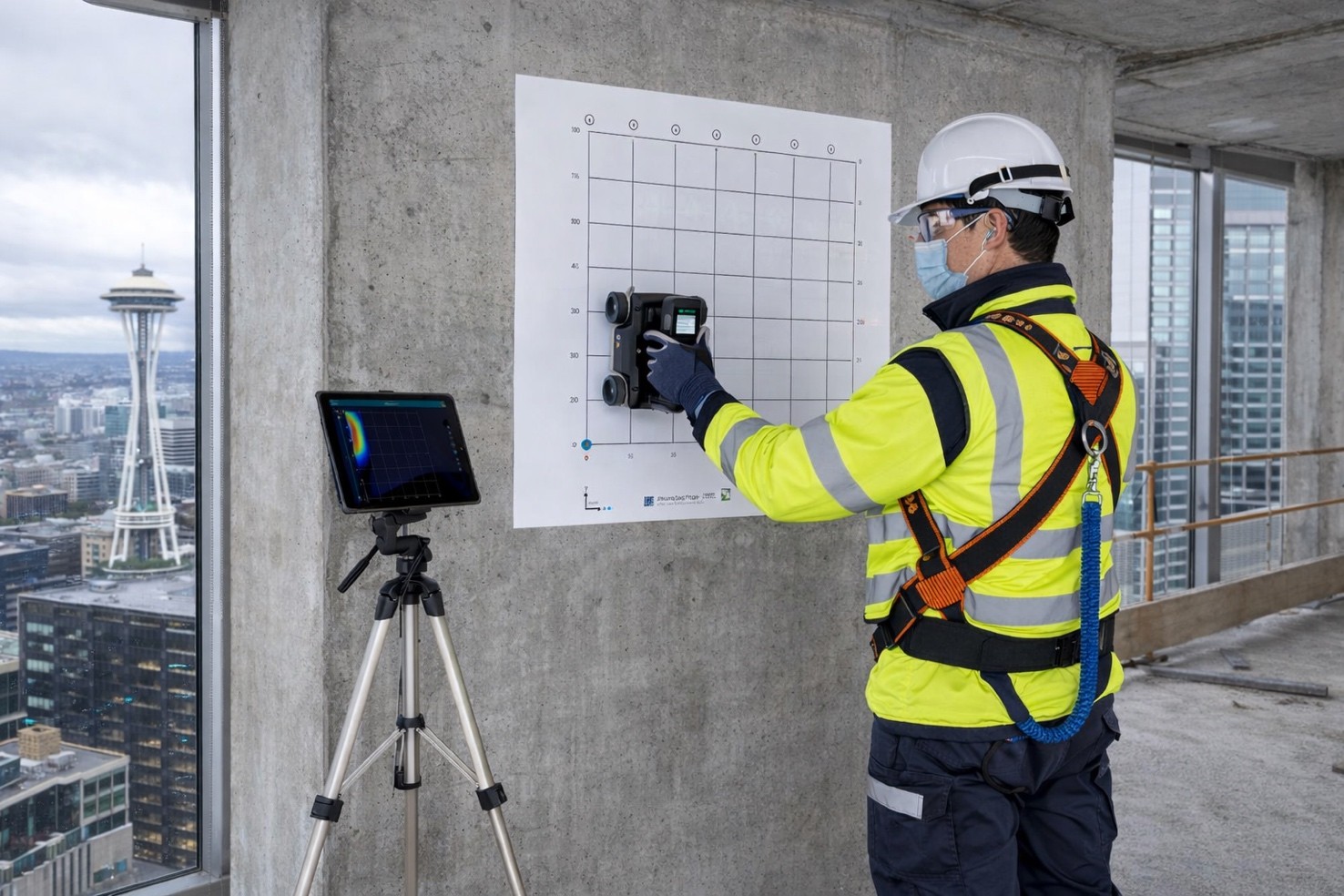
When it comes to construction, repair, remodeling, or structural work, one important step to take is scanning the concrete before drilling or cutting. Concrete can hide a network of reinforcement bars, conduits, post-tension cables, and even voids. Without proper imaging, there are chances of damage, injury, or even costly delays. However, modern technology today offers several methods for concrete scanning and imaging.
Here are three common and effective techniques used to see what’s inside or underneath concrete surfaces:
1. Ground Penetrating Radar (GPR)
The Ground Penetrating Radar (GPR) method is one of the most common methods for concrete scanning. It transmits radar pulses into the concrete. When these pulses strike changes in materials, say a metal bar or plastic conduit, they reflect back to the surface. The technician reads these signals on the display and identifies accordingly what lies beneath.
Ground penetrating radar scanning is non-invasive, fast, and can be carried out indoors or outdoors. It helps locate rebar, post-tension cables, and even voids within slabs. It may be employed on both walls and floors and works best on dry surfaces.
2. Ultrasonic Tomography
In ultrasonic tomography, sound waves are employed as opposed to the radar waves that are traditionally used. One transducer sends the high-frequency waves through the concrete, and on the opposite side, another one receives the signal. Differences in the speed and attenuation of the waves lead to a detailed image of the possible network inside.
This is usually done in situations where GPR, for instance, cannot be employed due to very thick or highly reinforced concrete. Ultrasonic tomography distinguishes finer details of cracked structures, honeycombing, or voids that remain obscure on other types of scans.
3. Radiography via X-Ray
Radiographic testing or concrete X-ray scanning works a lot like a normal X-ray, which means placing a source of radiation on one side of the concrete, with a detector on the opposite side. Targeted intervention aims at processing the image to clearly see the internal objects such as pipes, steel reinforcement, or embedded cables.
While this method offers the utmost detail, it necessitates safety measures, certified operators, and a controlled environment. This technique is applied in hospitals, data centers, or any environment where high precision is needed.
Looking for Concrete Scanning Services?
Whenever you plan work that involves cutting, drilling, or modifying concrete, you better get it scanned beforehand. C-N-I Locates offers concrete scanning services with advanced methods of detection.
With decades of locating experience in Washington and Oregon, C-N-I Locates is engaged in reducing risk exposure and increasing insight into what lies below. Our team can work on a variety of projects, all the way from locating utilities to finely detailed structural imaging.
FAQs
When should I choose ground penetrating radar over other scanning methods?
As GPR is quick and effective in identifying different objects like rebar, conduits, and voids, it’s commonly a first choice for concrete scanning. It can be used on any concrete slab and doesn’t necessitate access to both sides of the surface being scanned.
Is concrete X-ray safe for use in active work areas?
Since concrete X-ray uses radiation, strictly following safety protocols is a must. These usually mean evacuating workers from the area during scanning. Although this procedure is always effective, it is best done in controlled environments or during off-hours.
What’s the difference between ultrasonic tomography and GPR?
The main difference is that ultrasonic tomography works with sound waves, and GPR works with radar signals. Ultrasonic methods help in detecting the internal defects of cracks and honeycombing, particularly when any concrete is thick or heavily reinforced, and radar has its limitations.